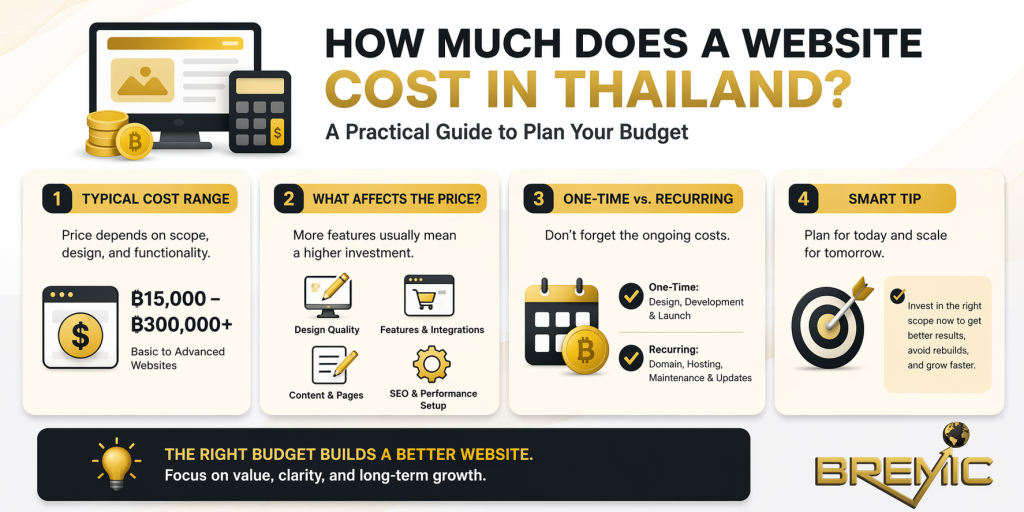
If you are trying to understand how much does a website cost in Thailand, the honest answer is that the range is wide because the market is wide. A very basic brochure-style site can start around ฿14,900 to ฿18,000, while more established agencies in Thailand often show minimum project sizes from US$1,000 to US$5,000+, and custom projects can climb much higher depending on scope, functionality, and content requirements.
That matters because the real cost of a website is not just the launch fee. It is the combined cost of strategy, design, development, content, SEO readiness, hosting, maintenance, and the business mistakes that happen when a site is built too cheaply for its purpose. If you are comparing quotes in Thailand, the right question is not “What is the cheapest website?” but “What does this budget actually include?”
What Is Web Design?
Web Design is not just how a website looks. In practical terms, it includes the structure of the site, the page layouts, mobile responsiveness, user experience, content presentation, and the way the front end connects to a CMS or other business functions. In the Thailand market, many agencies position web design as part of a broader delivery package that can include WordPress development, ecommerce functionality, responsive design, SEO setup, and ongoing support.
For a business owner, that distinction matters. A website quote may cover only visual design and page build, or it may also include discovery, copy support, technical setup, hosting, security, analytics, and launch support. Two proposals with similar prices can represent very different levels of work.
Why Website Cost Matters
Website pricing is an SEO and business issue, not only a procurement issue.
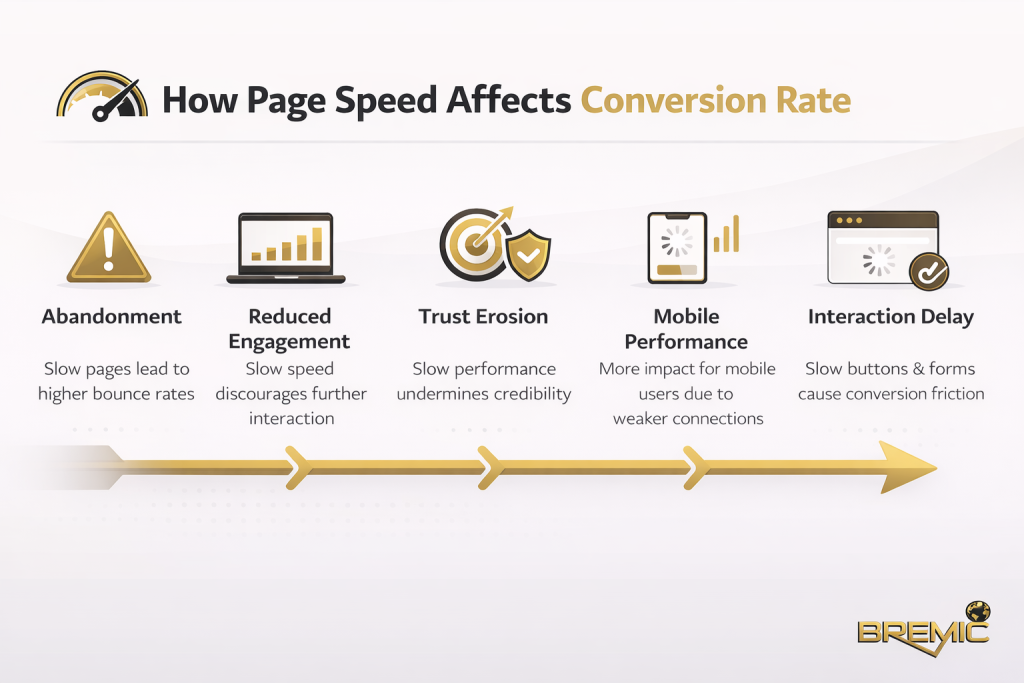
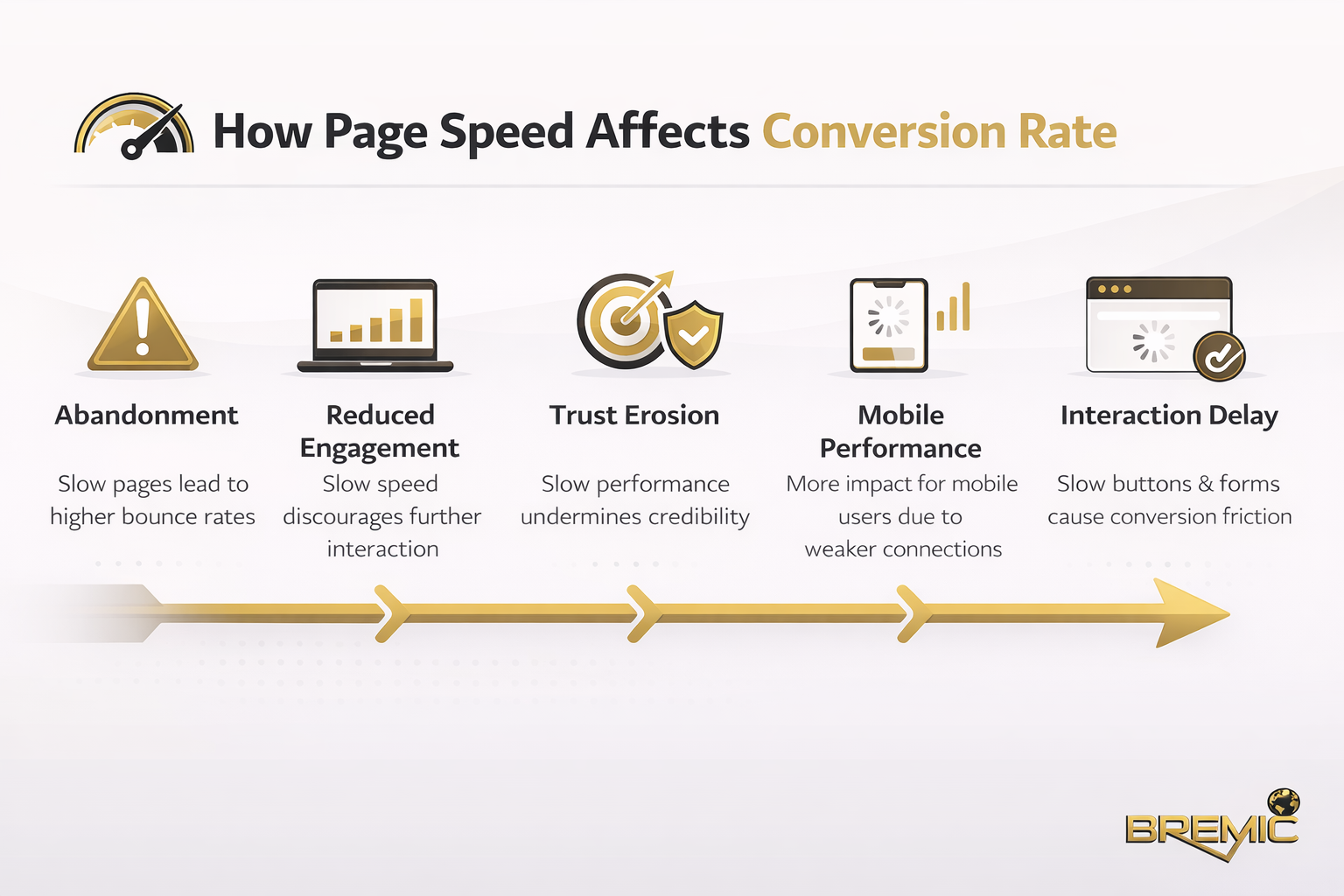
When budgets are too low for the job, the first things that usually get cut are the things that help a site perform: clear page structure, good service-page copy, internal linking logic, technical cleanup, mobile performance, conversion paths, and proper CMS setup. A site can still go live, but it may not rank well, convert well, or scale well.
That is why cost should be evaluated against business purpose. A five-page credibility site for a local service company has a very different job from a multilingual lead-generation site, an ecommerce store, or a custom platform. Treating them as if they should cost the same is where many bad decisions begin.
How Website Pricing Works in Thailand
Typical website cost ranges in Thailand
Based on current pricing pages from Thailand agencies and third-party agency listings, a sensible working view looks like this:
A basic small-business site built from a simple structure or template-led process often starts around ฿15,000 to ฿40,000. That range is consistent with Thai agency entry pricing showing basic websites from ฿14,900 and professional website design starting from ฿18,000.
A more polished business website with a CMS, stronger design work, better planning, and clearer scope often sits around ฿40,000 to ฿120,000. That is broadly in line with Thailand WordPress agencies offering fixed packages from ฿45,000, plus Clutch listings showing many Thailand agencies with minimum engagements starting at US$1,000+ and some at US$5,000+.
An ecommerce, multilingual, booking, or integration-heavy website often moves into ฿100,000 to ฿300,000+ territory because complexity rises fast once you add product data, payments, user flows, custom forms, or operational integrations. Thai agency pricing pages also show overall website pricing stretching up to ฿500,000, which supports that broader upper range.
A custom platform or enterprise-level build can exceed those ranges significantly. That is no longer standard brochure-site pricing. At that point, you are paying for system thinking, custom functionality, QA depth, stakeholder management, and long-term technical decisions, not just page design.
These are not fixed market averages. They are practical budgeting ranges inferred from current Thailand market signals. The main point is that price follows scope far more than it follows the label “website.”
One-time costs versus recurring costs
Another reason website budgets get confusing is that some providers bundle extras and others do not. One quote may include hosting, security, business email, and basic setup, while another may quote only the build and charge separately for the rest. For example, one Bangkok pricing page says its packages include hosting, business email, and security enhancements, while another emphasizes fixed pricing but makes clear that additional pages, complex integrations, multilingual setups, and booking systems are quoted separately.
Recurring costs are usually modest compared with the build, but they still matter. THNIC lists .co.th registration at ฿856 per year, and Thai hosting examples range from about ฿150 per month for entry WordPress hosting to ฿3,210 per year for a local starter hosting package.
That means the development fee is usually the big line item, but hosting, domain renewal, plugin licenses, edits, backups, and support still need a place in the budget.
Important Subtopics That Push Cost Up or Down
Content scope
Page count alone is a poor pricing model, but content scope matters a lot. A site with five pages of clear, ready-to-publish copy is much cheaper to launch than a site with fifteen service pages, case studies, FAQs, location pages, and no finished content. In many projects, content delays are a bigger cost issue than design.
Design level
A theme-based site is not the same as a custom-designed site. Custom design requires more discovery, more revision cycles, more decision-making, and more front-end work. That does not always mean it is the right choice, but it usually means a higher fee.
Functionality
Costs rise sharply when the website needs more than presentation. Ecommerce, booking systems, CRM integrations, multilingual setups, membership areas, calculators, custom filtering, and API connections all increase build time and testing requirements. Even Thai agencies with fixed packages explicitly call out features like multilingual setups, booking systems, and complex integrations as add-on scope.
SEO readiness
Not every web design quote includes serious SEO thinking. Some providers advertise SEO-ready websites or include basic SEO in packages, but that often means foundational setup rather than keyword strategy, content architecture, internal linking plans, or full on-page optimization. A site can be “SEO-friendly” and still be underprepared for competitive search visibility.
Common Mistakes
One common mistake is comparing prices without comparing scope. A ฿25,000 quote and a ฿90,000 quote may look like they are for the same thing when they are not. One may include planning, responsive design, CMS setup, launch support, and revisions. The other may cover only a basic build.
Another mistake is underestimating content. Businesses often assume web design is the expensive part and content can be added later. In reality, unclear service messaging, weak page structure, and missing proof points are often what make a website underperform.
A third mistake is buying for launch day instead of buying for the next two years. A very cheap site can become expensive once you need redesign work, SEO repairs, speed fixes, or a migration because the original build was too limited.
Practical Guidance
If you want to approach website pricing in Thailand strategically, do this:
- Define the business goal first. Is this a credibility site, a lead-generation machine, an ecommerce store, or a custom business tool?
- Write down the real scope. Include page count, languages, CMS needs, features, integrations, copy requirements, and who supplies content.
- Ask for a scope breakdown. You want to see what is included, what is excluded, and what triggers extra cost.
- Separate build cost from ongoing cost. Domain, hosting, maintenance, and support should not be mixed into one vague number.
- Plan for phase two now. If the budget is tight, launch a smaller but well-structured site first, then expand.
That last point is often the smartest move. A focused website with strong structure and clear service pages is usually better than an oversized, underfunded build.
Timing and Expectations
Timing usually tracks complexity. Agencies in Thailand commonly frame timelines around project requirements, and some market guidance puts a professional website at roughly 6 to 12 weeks from concept to launch, with some custom Webflow or Framer projects around 6 to 8 weeks.
In practice, speed depends on more than the agency. Content readiness, feedback speed, decision-making, translation, approvals, and revision discipline all affect launch timing. A straightforward site can move quickly. A custom site with unclear inputs almost never does.
Conclusion
So, how much does a website cost in Thailand?
For a simple business website, the realistic starting point is often around ฿15,000 to ฿40,000. For a more serious CMS-based business site, a more practical range is often ฿40,000 to ฿120,000. Once you add ecommerce, multilingual content, integrations, or custom workflows, budgets commonly move into ฿100,000+ territory and can climb much further depending on the build.
The strategic takeaway is simple: website pricing in Thailand makes sense when scope makes sense. The right budget is not the lowest quote. It is the budget that matches the website’s actual job, includes the essentials, and leaves you with a site that can support visibility, credibility, and growth over time.