Restaurant and cafe web design in Thailand: what actually drives local visibility
A restaurant or cafe website in Thailand has a narrow job description, but it has to do that job well. It needs to help people discover the business, decide it is worth visiting, and take action quickly. That action might be booking a table, checking the menu, getting directions, messaging the business, or placing an order.
That is why restaurant and cafe web design Thailand is not just about aesthetics. Good design supports local search visibility, builds trust fast, and removes friction for mobile users who are often making decisions in the moment. A beautiful site that is slow, confusing, or disconnected from local SEO will underperform, no matter how polished it looks.
This article explains what restaurant and cafe web design should achieve in the Thai market, how it connects to local SEO, and what businesses should prioritize if they want a website that supports real-world foot traffic and lead generation.
What restaurant and cafe web design means in practice
In this sector, web design is not simply about branding. It is about structuring a digital experience around the way people actually search, compare, and choose places to eat or drink.
For most restaurants and cafes, the website needs to support a few critical decisions:
- What kind of place is this?
- Where is it located?
- What does the menu look like?
- Is it open now?
- Can I book, call, message, or order easily?
- Does it feel trustworthy enough to visit?
That makes hospitality web design more operational than many business owners expect. The site needs clear information architecture, strong local relevance, fast loading, and a mobile-first interface. It also needs to align with how Google evaluates local businesses through content, location signals, structured business information, and user experience.
In other words, the website is part of the local search ecosystem, not a separate branding asset.
Why web design and local SEO are tightly connected
Local SEO for a restaurant or cafe is rarely driven by content volume alone. It depends on how well the business sends consistent, credible signals about what it offers and where it operates.
A good website supports those signals in several ways.
It reinforces location relevance
If someone searches for a cafe in Bangkok, a brunch spot inสุขุมวิท, or a restaurant near a specific district, Google needs confidence that the business serves that area and matches that intent. Clear location pages, embedded maps, consistent business details, and locally relevant copy all help.
A website that hides its address, uses vague headings, or buries practical details creates weaker local relevance.
It improves conversion from map and branded traffic
Many users do not begin on the homepage. They may find the business through Google Maps, a branded search, or a mobile search result. When they land on the site, they need immediate confirmation that they are in the right place.
That means the website must surface core information early: cuisine or concept, location, hours, menu access, contact methods, and proof of quality. If those details are hard to find, users bounce and continue comparing alternatives.
It gives Google a better understanding of the business
Google Business Profile is important, but it is not enough on its own. The website provides context that helps search engines understand the business model, service area, menu type, atmosphere, and supporting details.
This matters especially in competitive urban markets in Thailand, where many businesses have similar profile structures and limited differentiation in directory listings.
What a high-performing restaurant or cafe website in Thailand should include
The strongest hospitality websites are usually not the most complex. They are the most deliberate.
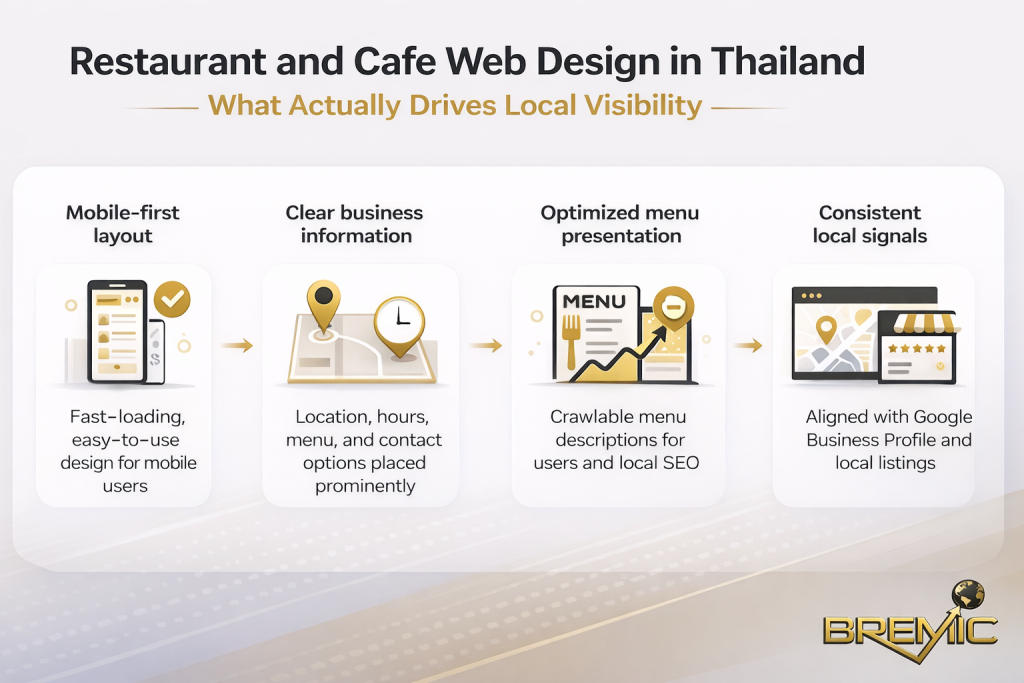
Mobile-first layout
A large share of restaurant discovery happens on mobile. Users may be walking, commuting, or making a quick decision with limited patience. The site should load quickly, keep navigation simple, and place action points where they are easy to find.
That typically means:
- menu access without unnecessary clicks
- tap-to-call phone numbers
- visible directions or map access
- prominent booking or messaging options
- readable text and image sizing on smaller screens
Desktop design still matters, but mobile usability should shape the structure from the beginning.
Clear business information above the fold
Restaurants and cafes should not make visitors hunt for basics. The homepage or landing page should make the following obvious within seconds:
- what the venue is
- where it is located
- who it is for
- how to take the next step
This is especially important for businesses that rely on local discovery, tourists, expats, or first-time visitors who may not already know the brand.
Menu presentation that supports both users and search visibility
Menus are one of the most important content assets for hospitality businesses, but they are often handled poorly. Uploading a low-quality PDF or burying the menu inside an image gallery reduces usability and weakens search visibility.
A better approach is to present menu categories in crawlable page content where practical, while still offering a downloadable or viewable menu format for convenience. This allows search engines to understand what the business serves and gives users a faster way to evaluate fit.
For cafes, that may include signature drinks, beans, brunch items, or dessert offerings. For restaurants, it may include cuisine type, popular dishes, dietary options, and meal occasions.
Strong visual credibility without overloading the page
Hospitality is a visual category, so photography matters. But image-heavy sites often become slow and harder to use. The goal is not to show everything. It is to show enough of the space, food, and atmosphere to create confidence.
Good design uses visuals strategically. It balances image quality with performance and avoids sliders, oversized video backgrounds, or decorative effects that slow the experience down.
Practical conversion paths
Restaurants and cafes in Thailand often rely on several conversion channels, not one. Depending on the business, useful website actions may include:
- reservation forms
- phone calls
- LINE contact
- map navigation
- food delivery links
- event or private dining inquiries
The right setup depends on the business model. A fine dining restaurant may prioritize reservations. A neighborhood cafe may care more about directions, menu browsing, and messaging. The website should reflect actual operational priorities rather than generic best practices.
Local SEO considerations specific to the Thai market
Thailand has a competitive hospitality scene, especially in Bangkok, Chiang Mai, Phuket, Pattaya, and destination areas with heavy tourist traffic. That makes local context more important, not less.
Bilingual or multilingual usability
Many restaurants and cafes in Thailand serve a mixed audience. That may include Thai customers, expats, and tourists. If the customer base is multilingual, the website should support that reality with clear language options and consistent business information.
This is not only a usability issue. It also affects search relevance and conversion. A site that communicates clearly to its real audience has a stronger chance of attracting qualified local and travel-related searches.
Location specificity matters
Broad references to Thailand are rarely enough. Local intent often centers on city, district, neighborhood, or landmark-level searches. The site should reflect how people actually search for places nearby.
For example, a venue may need to reinforce relevance around a city area, shopping district, transit-adjacent location, or local dining scene. That can be done naturally through page copy, metadata, contact details, embedded maps, and supporting content.
Consistency across platforms
A website does not operate in isolation. Name, address, phone number, opening hours, and core business details should align with the business’s Google Business Profile and other major listings.
Inconsistent details create trust problems for users and reduce confidence for search engines. This is a basic issue, but it remains one of the most common weaknesses in local SEO.
Common mistakes that weaken performance
Many restaurant and cafe websites fail for simple reasons rather than technical ones.
Designing for appearance before usability
A visually impressive site can still perform poorly if the menu is hard to find, the location is unclear, or the mobile layout is frustrating. Hospitality businesses often overinvest in mood and underinvest in decision support.
Treating SEO as a separate add-on
If local SEO is only considered after the site is designed, important structural opportunities are usually missed. Page hierarchy, headings, internal linking, schema opportunities, local content, and indexable menu content should be considered during planning, not after launch.
Relying too heavily on third-party platforms
Delivery apps and social media are useful channels, but they should not be the business’s only digital foundation. A restaurant or cafe without a strong website has less control over search visibility, brand presentation, and long-term discoverability.
Publishing thin or generic copy
Many hospitality sites use generic phrases about quality, passion, or atmosphere without giving users meaningful information. That weakens both trust and relevance. Useful content should describe the concept, offerings, location context, and customer experience in a specific way.
How to evaluate whether your current website is doing its job
A restaurant or cafe website in Thailand is probably underperforming if any of the following are true:
- users cannot access the menu quickly on mobile
- location details are incomplete or hard to find
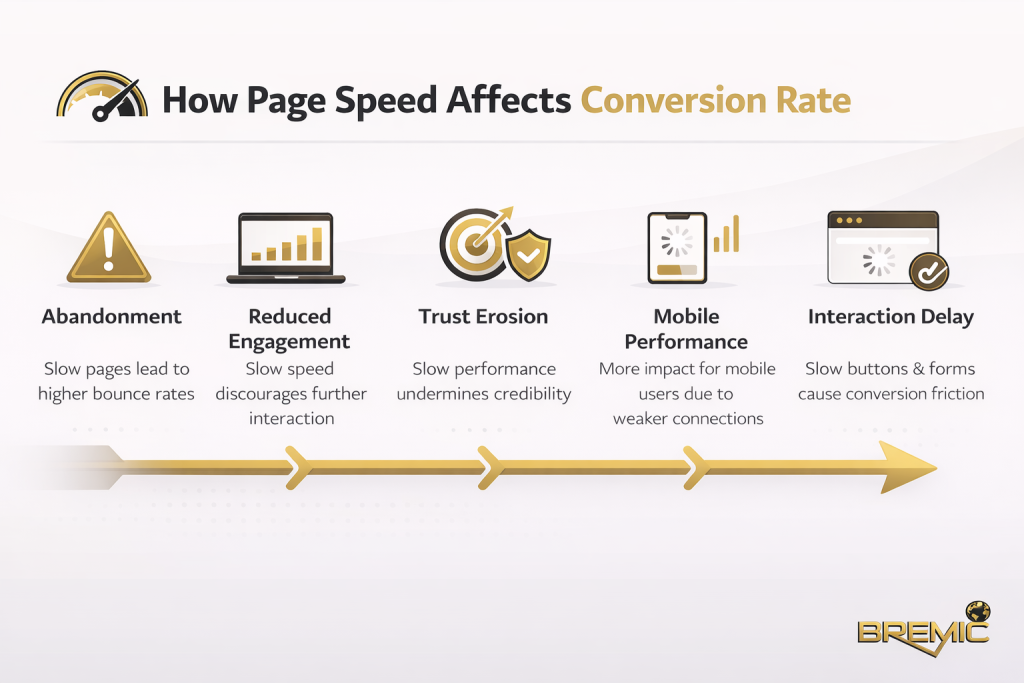
- the site is slow on mobile data
- booking, contact, or direction actions are buried
- pages do not clearly target local intent
- business details differ across the website and Google Business Profile
- the site looks polished but generates little measurable inquiry or visit intent
A useful audit starts with user friction, then moves into local SEO structure. That includes technical basics, content quality, search snippet performance, internal linking, and conversion flow.
For businesses looking at broader sector-specific strategy, it also helps to review how the site fits within a larger industry-focused web design approach, rather than evaluating pages in isolation.
Strategic recommendations for restaurant and cafe websites
For most businesses in this category, the best next step is not a full redesign for its own sake. It is a focused improvement plan tied to local search behavior and conversion priorities.
Start by clarifying the core journeys the website must support. Then make sure the structure, content, and calls to action match those journeys.
In practical terms, that usually means improving mobile usability, strengthening local business signals, presenting menus more effectively, and simplifying action paths. It may also mean creating more location-aware landing pages or refining content for how people search within specific areas of Thailand.
The right strategy depends on the venue type, audience mix, and competitive landscape. A premium destination restaurant, a neighborhood cafe, and a multi-location hospitality brand will not need the same site architecture.
What to expect from a strong website over time
A better restaurant or cafe website will not transform search visibility overnight. Local SEO typically improves through stronger consistency, better user experience, clearer business signals, and gradual trust building.
What a strong website can do relatively quickly is improve the quality of traffic it receives and increase the percentage of visitors who take action. Over time, that creates a stronger foundation for organic visibility, branded search performance, and local discovery.
The key is to judge the site by business outcomes, not just design approval. If it helps the right people find the business, trust it, and act without friction, it is doing its job.
Final takeaway
Restaurant and cafe web design Thailand should be approached as a business performance issue, not just a visual one. In a local search environment where users make fast decisions and compare multiple options, the website needs to be clear, fast, locally relevant, and built around action.
The most effective sites in this category do not try to impress with unnecessary complexity. They make it easy for search engines to understand the business and easy for customers to choose it. That combination is what turns a restaurant or cafe website into a practical local growth asset.