Web design and SEO for industries in Thailand
Web design and SEO for industries in Thailand should not be treated as separate disciplines. A site that looks polished but ignores search intent, crawlability, and local user behavior will struggle to generate qualified traffic. A site that targets keywords but provides a weak user experience will struggle to convert that traffic into leads, bookings, inquiries, or sales.
For businesses operating in Thailand, that gap becomes even more obvious. User expectations vary widely by industry. A hotel website needs to support trust, availability checks, and location-driven discovery. A legal or financial services site needs clarity, credibility, and structured service information. An ecommerce brand needs strong technical SEO, category architecture, and frictionless mobile conversion. The same design framework does not serve all of them equally well.
This pillar page explains how web design and SEO for industries in Thailand should be approached strategically. It covers what matters, what tends to go wrong, and how different sectors should align content, site structure, and on-page experience with business goals.
Why industry-specific web design and SEO matter in Thailand
Many businesses still build websites around internal preferences rather than user behavior. Pages are structured around company departments, service labels, or visual trends instead of how people actually search. That usually leads to weak rankings, poor engagement, and low conversion efficiency.
In Thailand, that issue is amplified by a few practical realities:
- Search behavior often includes a mix of English and Thai brand, service, and location terms
- Mobile usage strongly shapes browsing and buying behavior
- Trust signals matter more in sectors where users compare providers carefully before contacting anyone
- Local relevance affects visibility, especially for service-area and intent-driven queries
- Different industries have different proof requirements, conversion paths, and content priorities
A hotel guest, a real estate investor, and someone searching for a clinic are not looking for the same information in the same order. Their decision criteria are different, so the website architecture and SEO strategy should be different too.
That is the core principle behind effective web design and SEO for industries in Thailand: build around search intent, decision-making behavior, and business-specific conversion goals.
What web design and SEO mean when they work together
A lot of websites treat design and SEO as separate workstreams. Design comes first, SEO is added later, and content is inserted wherever space is available. That approach usually produces compromise rather than performance.
A stronger approach starts with a simple question: what does the user need to find, understand, and do on this page?
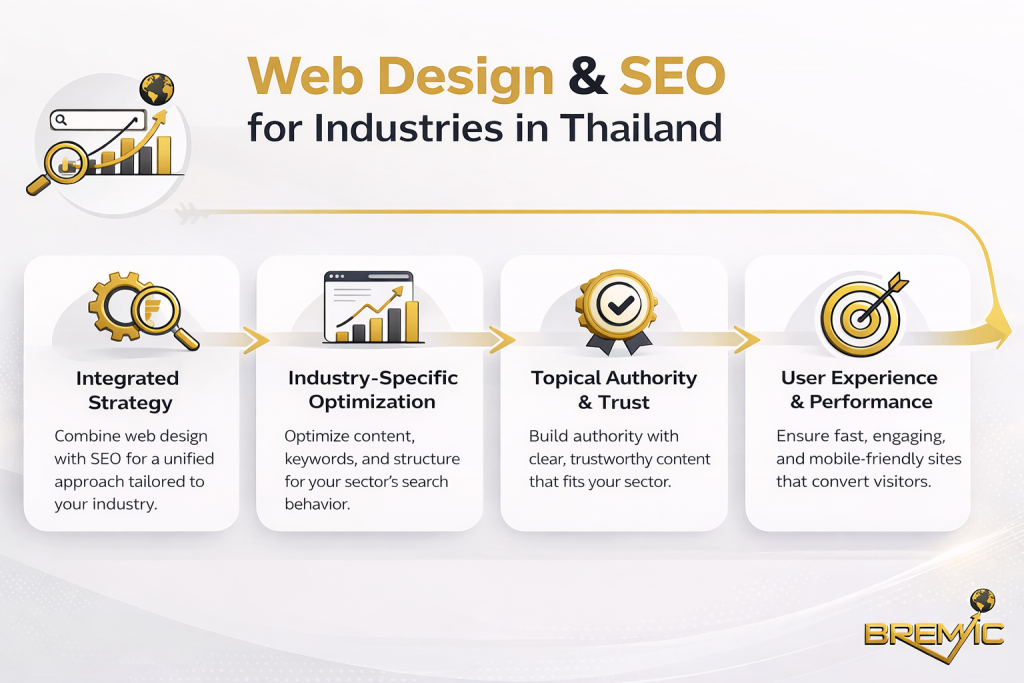
When design and SEO are aligned, the website does four things at once:
- It helps search engines understand the page topic, hierarchy, and relevance.
- It helps users find the right information quickly.
- It supports trust through clarity, structure, and evidence.
- It moves the visitor toward a sensible next action.
That means page templates, navigation, content sections, internal links, metadata, and calls to action should all support the same commercial and informational goals.
For example, a service page should not just rank for a target phrase. It should also answer the questions users have before they contact the business. A category page should not just list products. It should help users evaluate options, compare details, and move through the buying journey without friction.
The foundations of web design and SEO for industries in Thailand
Before looking at individual sectors, it helps to define the foundations that matter across most industries.
Search intent should shape the entire site structure
Good SEO starts long before title tags and headings. It starts with site architecture.
If the structure is built around meaningful topics and services, search engines can understand the website more easily and users can navigate it with less effort. If the structure is vague or inconsistent, pages end up competing with each other or failing to rank at all.
A strong pillar-and-cluster model is useful here. The pillar page covers the broader strategic topic, while supporting cluster pages go deeper into industry-specific applications. That creates topical relevance without forcing unrelated ideas onto the same page.
For a business serving multiple sectors, that often means separating industry pages clearly rather than combining them under one generic services section. This is where focused pages for sectors like hotels and resorts, restaurants and cafes, and real estate businesses become useful. Each one can target distinct search behavior, decision drivers, and conversion pathways.
Content should answer commercial questions, not just define services
Thin service pages are still common. They usually mention a service name, add a few generic paragraphs, and ask users to get in touch. That is rarely enough.
Users want practical information. They want to know what applies to their industry, what the process looks like, what matters most, and what weak execution looks like. The content should reduce uncertainty, not simply fill space.
For SEO, that matters because strong pages tend to cover related subtopics naturally. They reflect real knowledge rather than surface-level keyword usage. They also create more opportunities for internal linking and richer page relevance.
User experience is a ranking support factor and a conversion factor
User experience is not a substitute for SEO, but poor UX will undermine SEO performance over time.
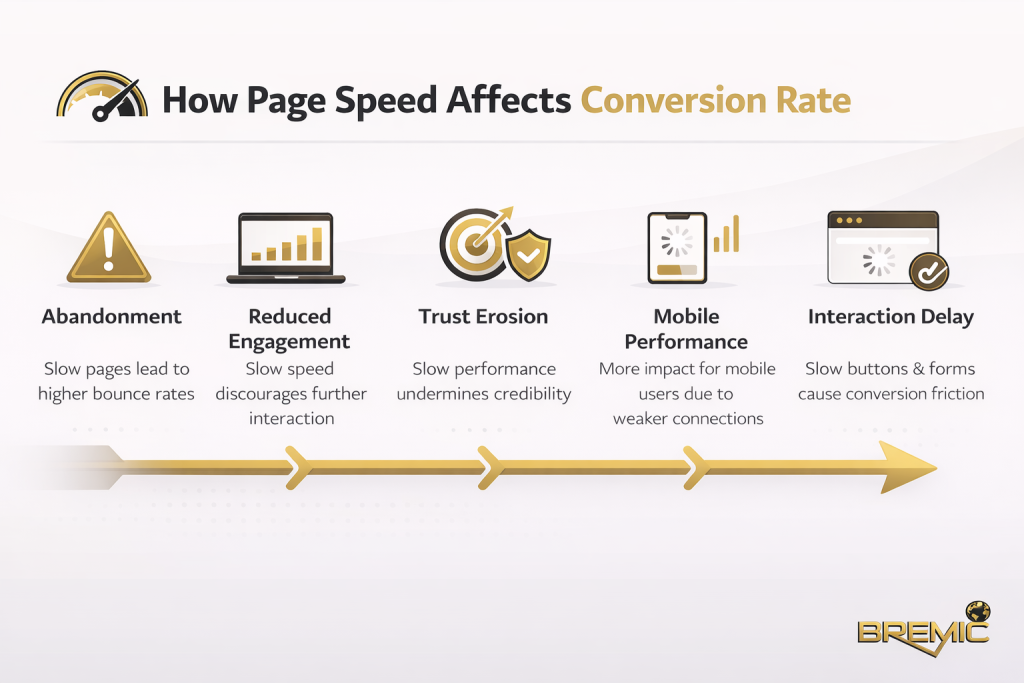
If a website is difficult to use on mobile, loads slowly, hides critical information, or overwhelms users with cluttered layouts, engagement suffers. Search visibility may also suffer when those quality issues limit satisfaction and reduce the usefulness of the page.
For businesses in Thailand, practical UX considerations often include:
- Mobile-first design rather than desktop-first adaptation
- Fast-loading page templates with compressed media
- Clear bilingual handling where relevant
- Strong visual hierarchy for service information
- Obvious trust elements near key decision points
- Minimal friction in inquiry, booking, or checkout flows
Internal linking should reinforce topical authority
Internal links are not just for navigation. They help search engines understand the relationship between pages and distribute relevance through the site.
For a pillar page like this, internal links should point naturally to supporting sector pages where the discussion becomes more specific. That gives users a clear next step and helps build a stronger topical cluster.
The key is relevance. Internal links should appear where the user would reasonably expect a deeper explanation, not where the writer is trying to force anchor text.
How web design and SEO priorities change by industry
The fundamentals stay consistent, but the application changes by sector. That is why web design and SEO for industries in Thailand should never rely on a one-size-fits-all template.
Hotels and resorts
Hotels and resorts depend heavily on trust, visual presentation, location relevance, and booking intent. Their websites need to balance inspiration with practical conversion support.
SEO priorities usually include destination terms, accommodation-related queries, amenity pages, and location-specific visibility. Design priorities often include room presentation, booking pathways, image quality, and clear access to policy information.
A hotel site should not bury essential details behind large visual blocks. It should make room types, facilities, maps, local context, and booking actions easy to find. Businesses in this space can explore a more targeted approach on the page about web design and SEO for hotels and resorts.
Restaurants and cafes
Restaurants and cafes usually compete on local visibility, menu intent, brand perception, and mobile usability. In many cases, the user’s decision window is short. People want to know what the place offers, where it is, whether it feels trustworthy, and how to take the next step.
That means strong local SEO signals, menu architecture, contact accessibility, map integration, and clear mobile presentation matter more than abstract brand messaging. Visual design is important, but it cannot interfere with speed or usability.
A sector-focused structure is often more effective than a generic hospitality page, which is why a dedicated resource for restaurants and cafes makes strategic sense.
Real estate
Real estate websites need a different information architecture entirely. Users are often comparing listings, neighborhoods, project types, and investment considerations. Search behavior is broader and more layered.
This sector usually benefits from:
- Clear category and listing structures
- Strong filtering and search tools
- Location-based landing pages
- Unique content at the project and area level
- Visible trust elements and contact paths
- Careful indexation decisions to avoid thin or duplicate pages
Real estate websites often fail when they rely too heavily on design aesthetics while neglecting crawlability, indexation control, and content depth. A more tailored framework is covered on the page for real estate web design and SEO.
Health and wellness
Health and wellness businesses need to be especially careful with trust, clarity, and content quality. Users are often making decisions based on service credibility, safety, qualifications, and outcomes they can reasonably expect.
That means the site should present services clearly, avoid vague or exaggerated claims, and make practitioner, process, and location information easy to verify. SEO content in this space should be practical and responsible. Pages that overpromise or use shallow health content weaken trust.
For businesses in this category, a dedicated page for health and wellness websites allows for more accurate strategic guidance than a broad service summary.
Legal and financial services
Legal and financial services require clarity, authority, and discretion. These are high-trust sectors where users often need confidence before they submit an inquiry.
The design should feel professional without becoming cold or hard to navigate. The content should explain service areas in plain language, address common concerns, and make expertise visible through structure rather than self-promotion alone.
SEO in this sector is usually strongest when it targets service-specific, problem-specific, and location-aware intent. Generic thought leadership without clear service relevance often does little for lead generation.
A more specialized framework can be found on the page covering legal and financial services.
Ecommerce
Ecommerce places heavier demands on technical SEO, category architecture, filtering logic, product content, and conversion design than many service-based sites. It also creates more risk. Poor handling of faceted navigation, duplicate URLs, weak category content, or thin product pages can damage visibility quickly.
For ecommerce businesses in Thailand, performance depends on more than design polish. They need a scalable structure that supports indexing, merchandising, user trust, and mobile checkout. That includes category intent mapping, internal linking, metadata control, and UX decisions that reduce cart abandonment.
A more detailed treatment is available on the ecommerce industry page.
What effective on-page optimization looks like
On-page optimization is often reduced to a checklist, but strong execution is more strategic than that.
A good page usually has:
- A clear primary topic
- A heading structure that reflects how users think about the subject
- Introductory copy that confirms relevance quickly
- Useful supporting sections that answer likely follow-up questions
- Internal links to related pages where deeper detail exists
- Metadata that accurately reflects page intent
- Image and media handling that supports speed and understanding
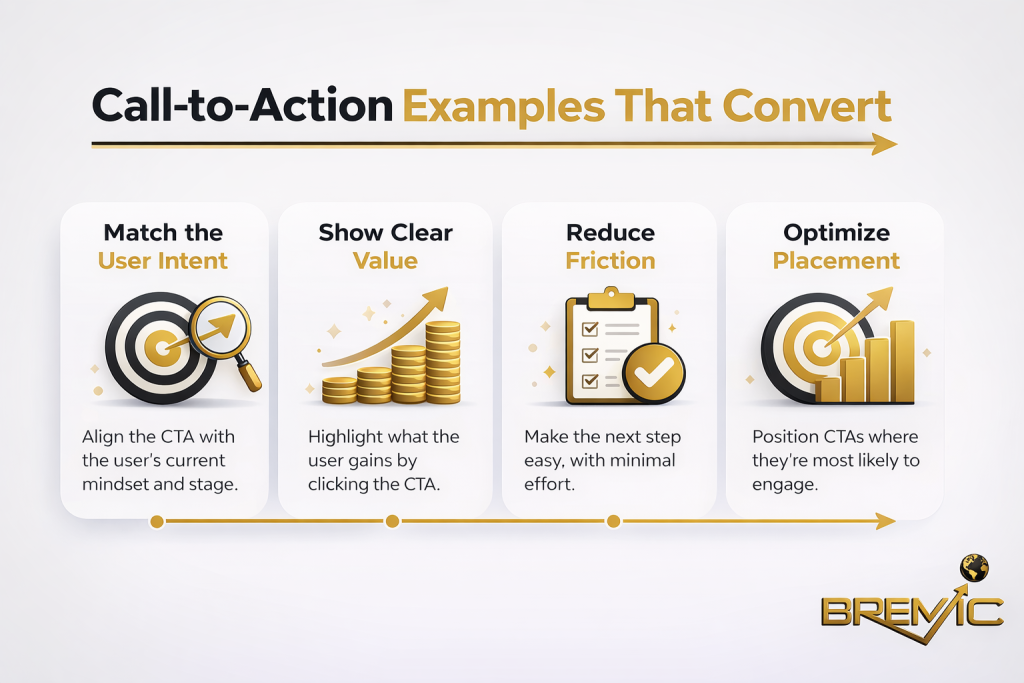
- Calls to action that match the stage of the journey
The important point is not to add every possible element. It is to make sure the page earns its place in the site architecture and satisfies the reason the user searched in the first place.
Common mistakes in web design and SEO for industries in Thailand
A lot of underperforming websites share the same structural weaknesses. The problem is usually not a lack of effort. It is a lack of alignment.
Treating all industries the same
A generic services page that briefly mentions hospitality, healthcare, retail, and professional services will rarely rank or convert as well as industry-specific pages. Different industries require different proof, page structures, and keyword targeting.
Designing pages before defining intent
When pages are designed first and structured later, SEO is forced into available layout blocks rather than guiding the content model. That often leads to shallow copy, weak headings, and poor internal link logic.
Overusing broad keywords
Broad terms may have higher search volume, but they are often less actionable and harder to rank for. More focused phrases tied to sector, problem, and geography usually align better with real commercial intent.
Publishing thin industry pages
An industry page should do more than announce that the business serves a sector. It should explain that sector’s specific needs, priorities, and website challenges. Thin pages add little value and rarely strengthen topical authority.
Ignoring trust signals
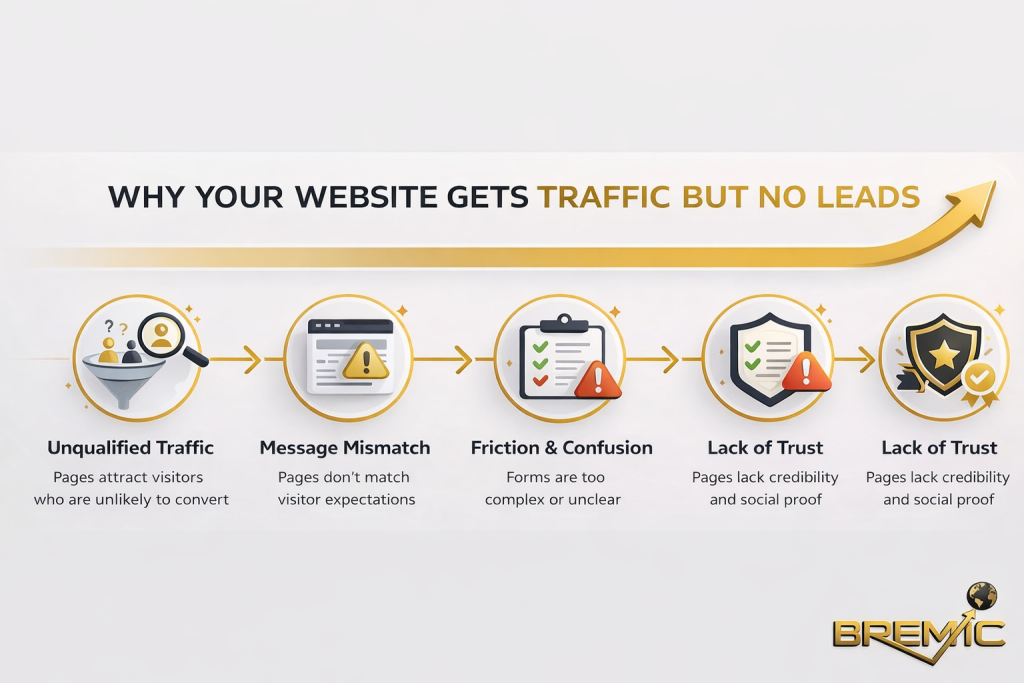
This is especially damaging in health, legal, finance, and real estate. If the page does not make experience, process, service scope, and next steps clear, users may leave even if the site ranks well.
Weak internal linking
Without meaningful internal links, pillar pages and cluster pages remain isolated. Search engines get less context, and users get fewer pathways to continue exploring relevant content.
A practical framework for building industry-focused SEO content
For businesses planning web design and SEO for industries in Thailand, a practical process usually works better than a purely theoretical one.
Start with business goals and conversion actions
Identify what counts as success for each industry page. That may be a qualified inquiry, a booking, a consultation request, or a product purchase. The page structure should support that outcome.
Map search intent by sector
List the core questions people in each industry are likely to search for. Separate informational queries from commercial evaluation queries. Use that to define which pages need to exist and how they should differ.
Build the information architecture before writing
Decide what belongs on the pillar page, what belongs on cluster pages, and what needs its own supporting resource. This prevents overlap and helps each page hold a distinct role.
Create content that reflects decision-making
Do not stop at definitions. Explain what matters, what weak execution looks like, how to evaluate options, and what businesses should prioritize first.
Design for clarity before decoration
Use visual design to improve comprehension, not distract from it. Strong spacing, hierarchy, and interaction design usually outperform visually busy layouts.
Strengthen the cluster with internal links
Use internal links where they help users move from broad strategy to sector-specific guidance. That is how the site builds authority as a connected system rather than a loose set of pages.
What to expect from a serious SEO strategy
SEO is not instant, and industry-focused website performance does not improve simply because pages have been published. Results depend on competition, site history, technical quality, content depth, and how well the architecture matches real search behavior.
In practical terms, businesses should expect SEO to be cumulative. Stronger site structure, better content targeting, cleaner internal linking, and more relevant page design can improve performance over time, but only if the execution is consistent.
That is why web design and SEO should be treated as long-term infrastructure, not a short-term campaign. A strong website becomes easier to expand, easier to optimize, and more useful across multiple industries when the foundations are planned properly.
Strategic takeaway
Web design and SEO for industries in Thailand work best when they are built around intent, structure, and business context rather than templates or trends. The goal is not to create one attractive website that says everything to everyone. The goal is to create a search-visible, user-focused website system where each page has a clear role.
For businesses serving multiple sectors, that usually means using a pillar-and-cluster approach: a broad page that explains the strategic framework, supported by industry pages that go deeper into the real requirements of each market. That structure improves relevance, supports internal linking, and gives users a more useful path from search to action.
When the architecture is clear, the content is specific, and the design supports decision-making, the website becomes more than a brochure. It becomes a durable growth asset.