Technical SEO is the part of Search Engine Optimization (SEO) that makes a website easier for search engines to crawl, understand, and index. For business websites, that matters more than many teams realize.
A site can have strong service pages, useful content, and a clear value proposition, but still underperform in search because of technical weaknesses. Slow templates, poor internal structure, indexing problems, duplicate URLs, broken canonicals, and weak mobile performance can all limit visibility before content quality even becomes the main issue.
That is why technical SEO basics for business websites should not be treated as a specialist concern reserved for enterprise brands or large publishers. They are foundational. If the technical layer is weak, content and link-building efforts become less efficient. If the technical layer is sound, every other SEO activity tends to work better.
This article explains what technical SEO means in practical business terms, why it affects rankings and website performance, and how to approach it in a way that is realistic for business owners, marketers, and in-house teams.
What is Search Engine Optimization (SEO)
Search Engine Optimization (SEO) is the process of improving a website so it can earn more relevant visibility in search engines. That includes attracting the right users, aligning pages with search intent, and making it easier for search engines to interpret the site correctly.
Technical SEO is one branch of SEO. While content SEO focuses on relevance and usefulness, and off-page SEO deals with authority signals such as backlinks, technical SEO focuses on accessibility and structure.
In practical terms, technical SEO answers questions like these:
- Can search engines crawl the website efficiently?
- Are important pages indexable?
- Does the site architecture help search engines understand priorities?
- Do page speed, mobile usability, and Core Web Vitals support a good user experience?
- Are duplicate URLs handled properly?
- Is the site sending clean, consistent signals through canonicals, redirects, sitemaps, and internal links?
For a business website, technical SEO is not about chasing obscure fixes for their own sake. It is about reducing friction between your site, search engines, and users.
Why Technical SEO Matters for Business Websites
Many businesses invest in content before they fix the underlying structure of the site. That often leads to avoidable inefficiency.
If Google cannot reliably crawl or index your most important pages, rankings suffer. If the site is slow or unstable on mobile, users are less likely to stay, engage, or convert. If service pages compete with near-duplicate location pages or parameter-based URLs, authority gets diluted across versions of the same content.
Technical SEO supports four business outcomes.
Better crawl efficiency
Search engines have limited crawl resources. On smaller sites, this may not feel urgent, but inefficient crawling still creates problems. If bots spend too much time on low-value pages, filtered URLs, or duplicate versions, important pages may be crawled less effectively.
Stronger indexing and rankings
A page cannot perform in search if it is not properly indexed or if search engines receive conflicting signals about which version should rank. Clean technical implementation helps search engines trust the preferred page.
Improved user experience
Technical SEO overlaps with usability. Fast loading, mobile-friendly layouts, secure browsing, and predictable navigation help both search engines and users. That connection is especially important for business websites where conversions depend on trust and ease of use.
More efficient long-term growth
A technically sound site scales better. As you add service pages, blog content, landing pages, and supporting cluster articles, strong architecture prevents confusion and keeps authority flowing through the site.
How Technical SEO Works in Practice
Technical SEO works by improving how a website is discovered, processed, and evaluated.
Search engines generally move through three broad stages:
- Crawling: discovering URLs through links, sitemaps, and prior knowledge
- Indexing: analyzing pages and deciding whether to store them in the index
- Ranking: evaluating indexed pages against a query based on relevance, quality, authority, and usability signals
Technical SEO affects all three stages.
For example, a service page may fail to rank not because the topic is weak, but because it is orphaned, blocked by a robots rule, canonicalized to the wrong URL, or buried too deeply in the site structure. Likewise, a blog article may get indexed but struggle to perform because the page is slow, difficult to render, or disconnected from the wider content cluster.
The goal is not technical perfection. The goal is to remove the issues that block visibility and weaken site performance.
Important Technical SEO Basics for Business Websites
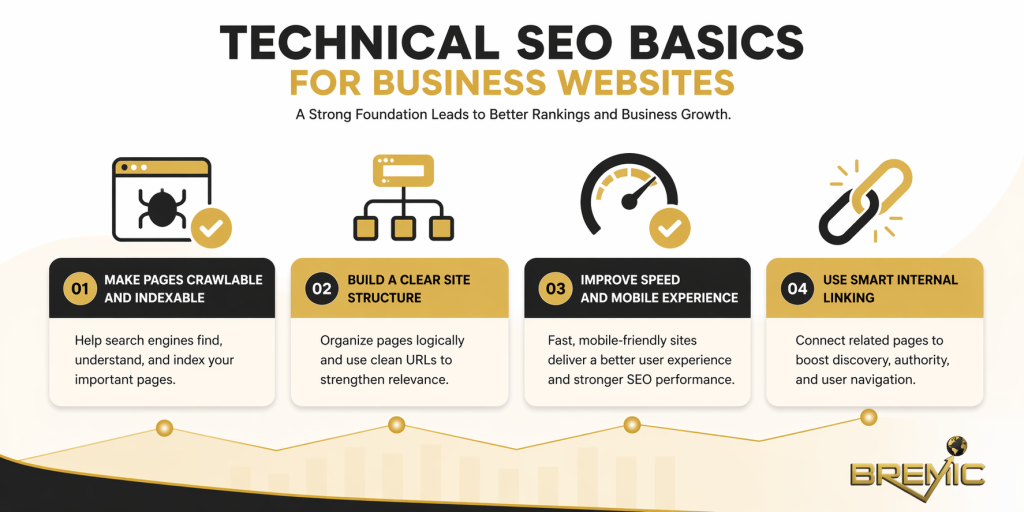
Crawlability and indexability
Crawlability refers to whether search engines can access a page. Indexability refers to whether they are allowed and likely to include it in the index.
These are related, but not the same. A page can be crawlable but intentionally marked noindex. It can also be blocked from crawling entirely, which means search engines may never properly assess it.
Business websites should review:
- robots.txt rules
- meta robots directives
- canonical tags
- XML sitemaps
- internal linking paths to important pages
A common issue is assuming that publishing a page means Google will automatically index it correctly. In reality, indexing depends on technical signals, content quality, internal prominence, and site trust.
Site architecture and URL structure
Site architecture helps search engines understand how pages relate to each other. It also helps users move logically from broad topics to specific solutions.
For business websites, a clean structure usually means:
- important commercial pages are easy to reach
- related content is grouped logically
- URLs are consistent and descriptive
- there is no unnecessary duplication across categories, tags, filters, or campaign URLs
This becomes especially important in a pillar-and-cluster model. A pillar page should sit at the center of a topic, while supporting articles address narrower subtopics. Technical SEO supports that model by making the structure easy to crawl and by reinforcing relationships through internal linking and clear hierarchy.
Internal linking
Internal linking is not just a content tactic. It is also a technical and structural signal.
Strong internal links help search engines discover pages, understand topical relationships, and identify which pages matter most. For business websites, internal linking should support both user journeys and topic authority.
That means linking:
- from top-level pages to key service or cluster pages
- from cluster articles back to relevant hub content
- between related supporting pages where intent genuinely overlaps
Weak internal linking often leaves valuable pages isolated. Even good content can underperform when it has no clear place in the wider structure.
Page speed and Core Web Vitals
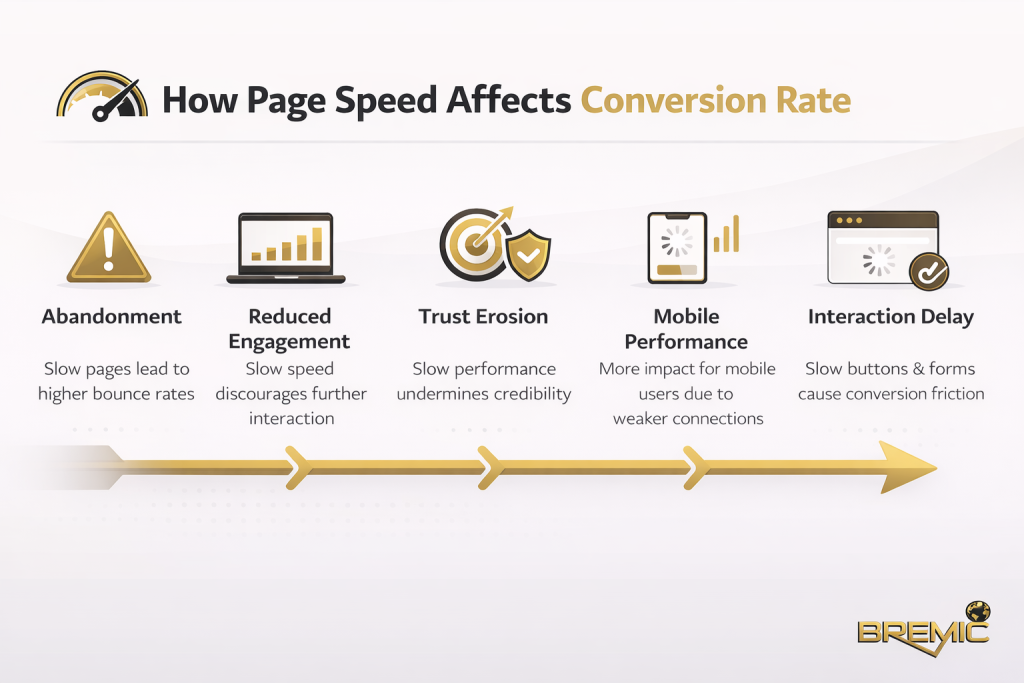
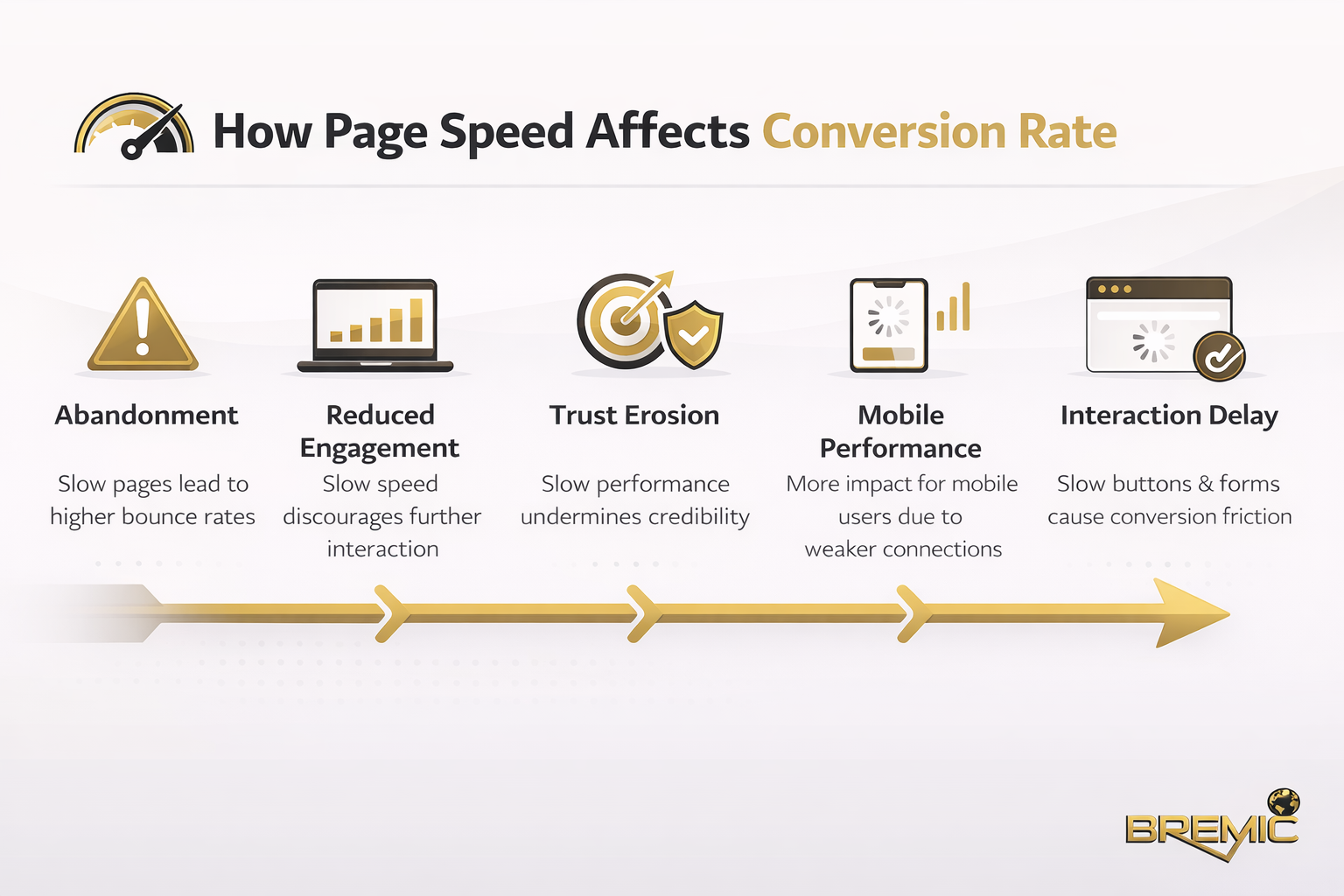
Performance matters because slow pages create friction for users and can reduce search visibility over time. Google does not rank pages based on speed alone, but poor performance can weaken the overall experience and hurt engagement.
Core Web Vitals focus on loading, responsiveness, and visual stability. For business websites, typical causes of poor performance include:
- oversized images
- excessive JavaScript
- bloated themes or page builders
- unoptimized third-party scripts
- weak hosting
- poor mobile rendering
The practical point is this: speed improvements should prioritize user-facing issues, especially on important landing pages, service pages, and high-traffic content.
Mobile usability
Google primarily evaluates sites through mobile-first indexing. If a business website works well on desktop but performs poorly on mobile, that creates a serious SEO risk.
Mobile usability is not just about responsive design. It includes readable text, usable navigation, stable layouts, fast loading, accessible buttons, and content parity between desktop and mobile versions.
A site that hides important content or internal links on mobile may weaken its own SEO signals.
Canonicals, redirects, and duplicate content control
Duplicate content is often a technical management problem rather than a content writing problem. Multiple URLs can represent the same or very similar content because of parameters, tracking tags, HTTP versus HTTPS versions, trailing slash variations, or archive structures.
Canonical tags help indicate the preferred version of a page. Redirects help consolidate outdated or alternate URLs. Both must be implemented carefully.
Poor canonical and redirect logic can confuse search engines, split authority, and create index bloat. For business websites, this issue is especially common after redesigns, CMS migrations, or repeated landing page creation.
Structured data and metadata
Structured data does not guarantee rankings, but it helps search engines interpret page content more clearly. On business websites, schema can support understanding of services, organizations, FAQs, reviews, and other page elements where appropriate.
Metadata still matters too. Title tags and meta descriptions are not purely technical in the strictest sense, but they sit close to the technical layer because they affect how pages are presented in search results and how clearly intent is communicated.
Common Mistakes Businesses Make
One common mistake is treating technical SEO as a one-time setup task. In reality, technical issues often reappear through redesigns, plugin changes, template edits, content expansion, and CMS updates.
Another mistake is focusing on minor technical details while ignoring larger structural problems. A business may spend time tweaking schema or compressing a few images while major service pages remain poorly linked, duplicated, or hard to index.
Businesses also frequently confuse volume with quality. Publishing more pages does not strengthen SEO if the site architecture is weak or if many pages overlap in purpose. This often leads to cannibalization, thin content, and indexing clutter.
A final mistake is separating SEO from development and UX decisions. Technical SEO works best when it is built into website management, not added after problems appear.
Practical Guidance for Getting Technical SEO Right
Start with the pages that matter most commercially. On most business websites, that means core service pages, category pages, location pages where relevant, and high-value informational content that supports the sales journey.
Then review the basics in order:
Check whether important pages can be crawled and indexed
Confirm that priority pages are accessible, indexable, included in XML sitemaps, and supported by internal links.
Simplify site structure before adding more content
If the site architecture is messy, publishing more articles will not solve the root problem. Clarify hierarchy first.
Strengthen internal linking intentionally
Map how pillar pages, cluster pages, and commercial pages support one another. Internal links should reflect business priorities and topic relationships.
Fix the highest-impact performance issues
Focus on mobile performance, template bloat, and slow-loading key pages before chasing marginal gains.
Standardize technical signals
Use consistent canonicals, clean redirect logic, secure protocols, and stable URL conventions.
For many businesses, the right approach is a recurring technical review process rather than a large one-off audit that sits unused. Small, consistent improvements usually outperform neglected “big fix” plans.
Timing and Expectations
Technical SEO improvements can have both immediate and delayed effects.
Some changes, such as fixing blocked pages, repairing broken canonicals, or improving internal links to important content, can influence crawling and indexing relatively quickly. Others, such as broader performance gains or site-wide structural improvements, may take longer to influence rankings in a visible way.
Results also depend on the site’s existing authority, the size of the technical issue, how competitive the search landscape is, and whether the content itself deserves to rank.
That is why technical SEO basics for business websites should be viewed as an infrastructure investment. It does not replace content strategy, authority building, or conversion work. It makes all of them more effective.
Conclusion
Technical SEO is the operational foundation of Search Engine Optimization (SEO). For business websites, it determines whether search engines can access, understand, and trust the pages that matter most.
The goal is not to turn every company into a technical SEO lab. It is to make sure the website is structurally sound, indexable, fast enough, mobile-friendly, and aligned with a logical content architecture.
When businesses get the basics right, they create better conditions for rankings, stronger topical authority, and more efficient long-term growth. That is why technical SEO should be treated as a strategic business asset, not a background checklist.