A lot of businesses publish content consistently and still struggle to turn that effort into pipeline. The problem is rarely volume alone. More often, the issue is that the content is disconnected from buyer intent, poorly structured, or measured against the wrong outcomes.
If you want to understand how to build a content strategy that generates leads, the starting point is not writing more blog posts. It is building a system that aligns content with real customer problems, search behavior, and conversion paths.
That is where strong Content Marketing becomes commercially useful. Done well, it helps you attract qualified visitors, build trust over time, and move prospects from awareness to consideration without relying entirely on paid acquisition.
This article breaks down how to approach that process strategically. You will see what lead-generating content strategy actually means, why it matters for SEO and growth, how to build one step by step, and which mistakes tend to weaken results.
What is Content Marketing
Content Marketing is the practice of creating and distributing useful, relevant content to attract and influence a defined audience. In practical terms, it means using articles, guides, landing pages, case studies, email content, and other assets to answer questions, solve problems, and support decision-making.
For lead generation, the goal is not just traffic. The goal is qualified attention from people who are likely to become customers.
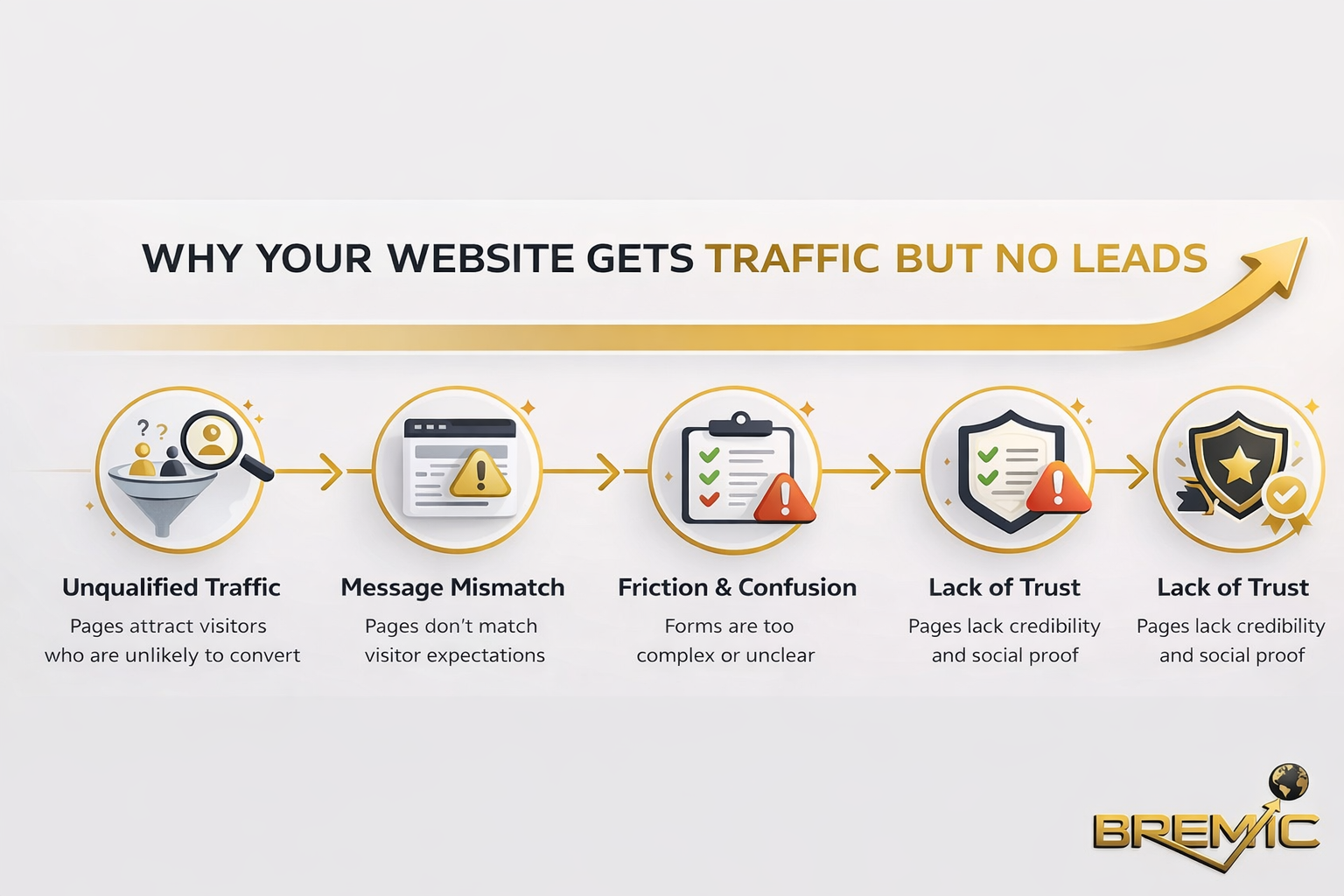
That distinction matters. A business can publish content that ranks and still generate very few leads if the topics attract the wrong audience or fail to connect content to a meaningful next step.
A lead-focused content strategy usually combines three things:
- Topics with real business relevance
- Content formats matched to search intent and buyer awareness
- Clear paths from informational content to conversion opportunities
So when thinking about how to build a content strategy that generates leads, think less about content as publishing and more about content as infrastructure.
Why It Matters
It creates compounding organic visibility
Search-driven content can keep attracting traffic long after publication, especially when it is built around relevant topics with lasting demand. That makes Content Marketing different from channels that stop producing the moment spend stops.
But traffic alone is not the point. The real value is that search often captures people while they are actively researching a problem, solution, or provider.
It improves trust before the sales conversation
Most leads do not convert because they read one article and immediately request a demo. They convert because repeated exposure builds confidence. Useful content helps prospects evaluate whether your business understands their needs.
This is where E-E-A-T matters in practice. Clear explanations, realistic advice, and evidence of hands-on understanding make the content more persuasive and more credible.
It supports topical authority and internal linking
A strong content strategy also strengthens site architecture. A pillar page can target a broad commercial theme, while cluster pages address related questions in more depth. That structure helps search engines understand subject relevance and gives users a clearer journey through the site.
For example, a business building authority around Content Marketing might have a pillar page on content strategy, supported by cluster articles on keyword research, content briefs, editorial planning, lead magnets, distribution, and conversion optimization.
How It Works
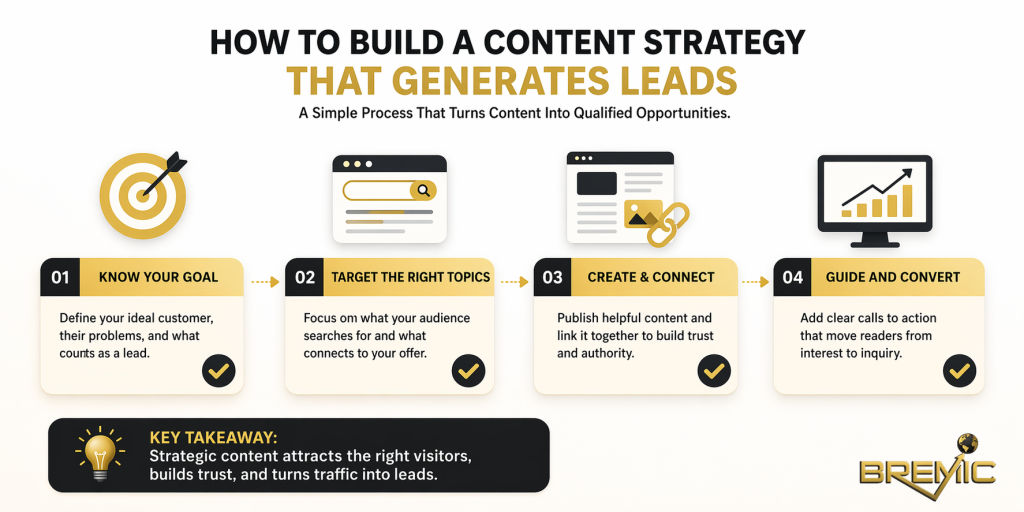
Start with business goals, not content ideas
The first step in how to build a content strategy that generates leads is defining what kind of lead you actually want.
A local service business, a B2B SaaS company, and a marketing agency will not need the same topics, offers, or conversion paths. Before planning content, clarify:
- Who the ideal customer is
- What problems they are trying to solve
- What service or product you ultimately want the content to support
- What counts as a lead in your model
Without this step, content strategy becomes disconnected from revenue.
Map content to the customer journey
Not every visitor is ready to convert at the same moment. Some are just identifying a problem. Others are comparing options. Some are actively looking for a provider.
A lead-generating strategy works best when content covers multiple stages:
Awareness content
This content helps people understand a challenge or opportunity. It often targets informational queries and broad pain points.
Consideration content
This content helps prospects compare approaches, frameworks, or providers. It often performs well for mid-funnel research queries.
Decision-support content
This includes service pages, case studies, solution comparisons, pricing guidance, and pages that reduce friction close to conversion.
If your site only publishes top-of-funnel blog posts, you may attract traffic but lose momentum before leads are created.
Choose topics with both search value and commercial relevance
This is one of the most important filters. Good topics do not just bring visits. They bring the right visits.
A useful topic usually sits at the intersection of:
- What your audience searches for
- What your business can genuinely help with
- What can naturally lead to a next step
That means some high-volume keywords are not worth prioritizing if they attract broad curiosity with little buying potential. Meanwhile, lower-volume topics can be far more valuable when they reflect strong intent and fit your offer closely.
Build clusters, not isolated articles
One article rarely builds enough authority on its own. A stronger approach is to create a structured cluster around a core theme.
For example, if your core topic is Content Marketing, related cluster content could cover content planning, audience research, keyword mapping, editorial calendars, lead magnets, conversion-focused blog design, and performance measurement.
This improves relevance, supports internal linking, and helps each page contribute to a broader ranking and lead-generation strategy.
Important Subtopics
Search intent matters more than raw keyword volume
A common mistake is selecting keywords based only on search numbers. The better question is what the searcher wants.
Someone searching for “what is content marketing” usually needs education. Someone searching for “content marketing agency for SaaS” is much closer to a commercial decision. Both queries have value, but they require different pages and different conversion expectations.
If you ignore intent, the page may rank poorly or convert poorly, even if the keyword looks attractive on paper.
Conversion paths must be built into the content
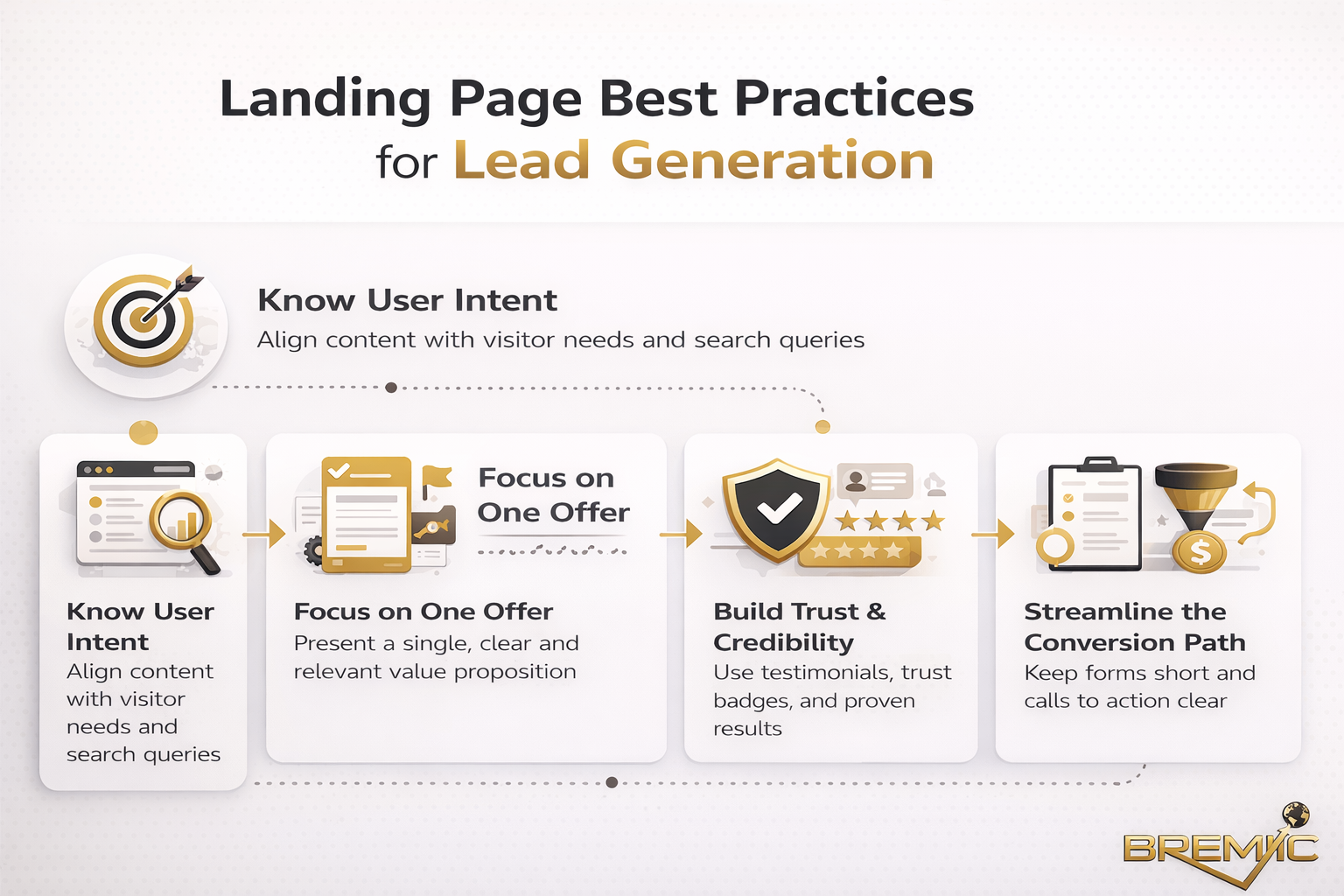
Lead generation does not happen automatically because a page gets traffic. There has to be a logical next step.
That next step might be:
- A consultation request
- A downloadable resource
- A contact form
- A product demo
- A related service page
- A case study that supports decision-making
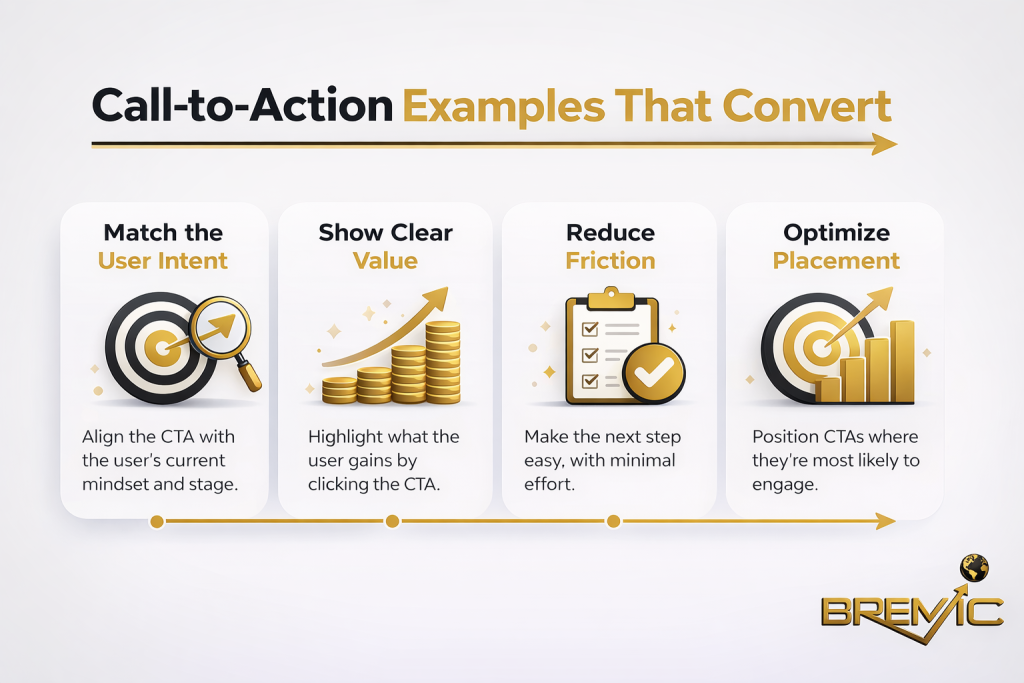
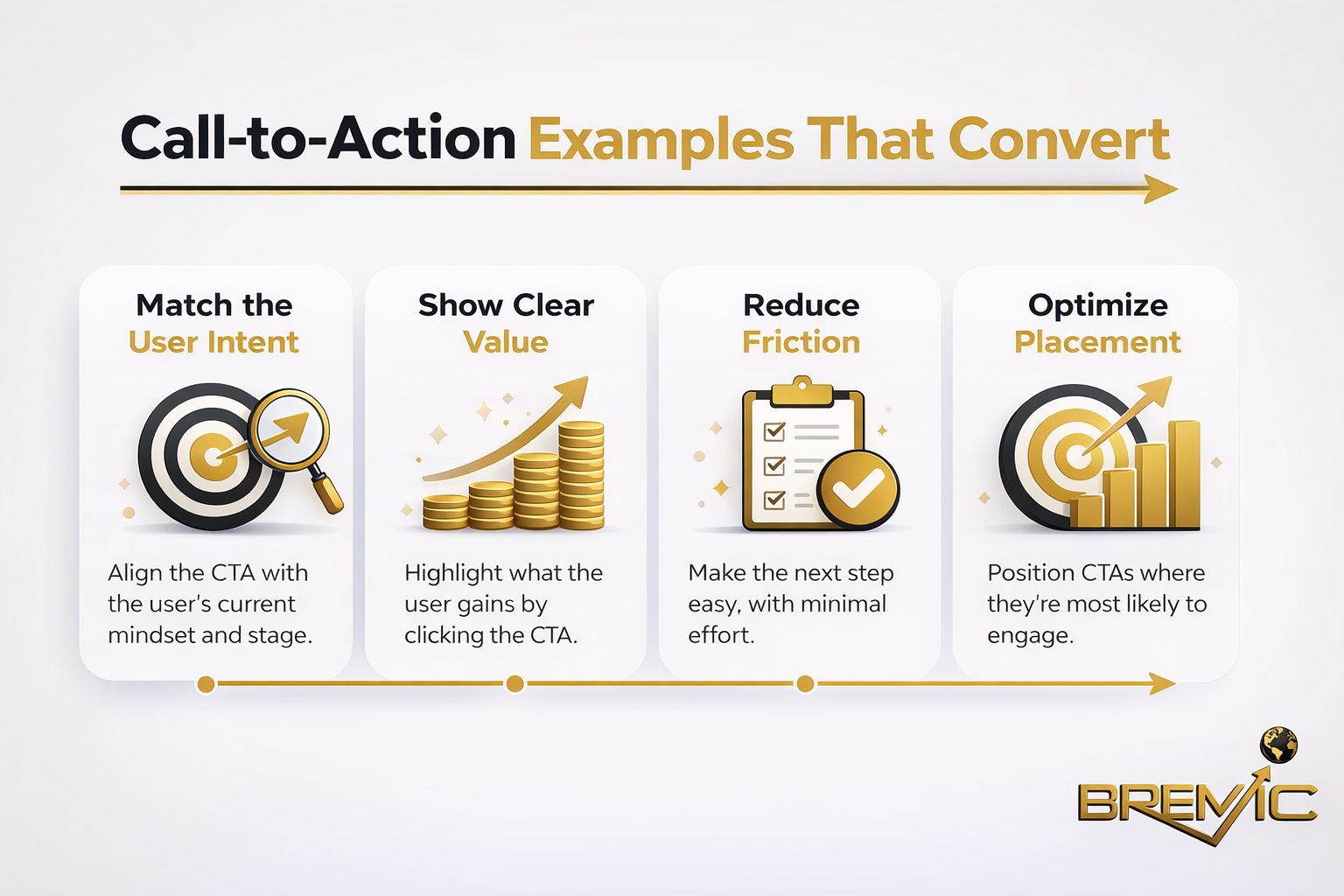
The key is relevance. A call to action should feel like the natural continuation of the reader’s problem, not an interruption pasted into the page.
Internal linking should guide, not manipulate
Internal links help distribute authority, but they also help users move from broad information to deeper evaluation. A well-built cluster should guide readers toward the most useful next page based on their stage of awareness.
Use internal links where they genuinely improve navigation. Link from broad educational pages to more specific supporting content, and from informational articles toward commercial or conversion-oriented pages where appropriate.
Common Mistakes
Publishing without a content model
Many businesses create content reactively. One article is based on a sales question, another on a trend, another on a keyword tool suggestion. The result is a scattered archive with no strategic depth.
A lead-generating content strategy needs structure. Topics should reinforce each other and contribute to a defined business goal.
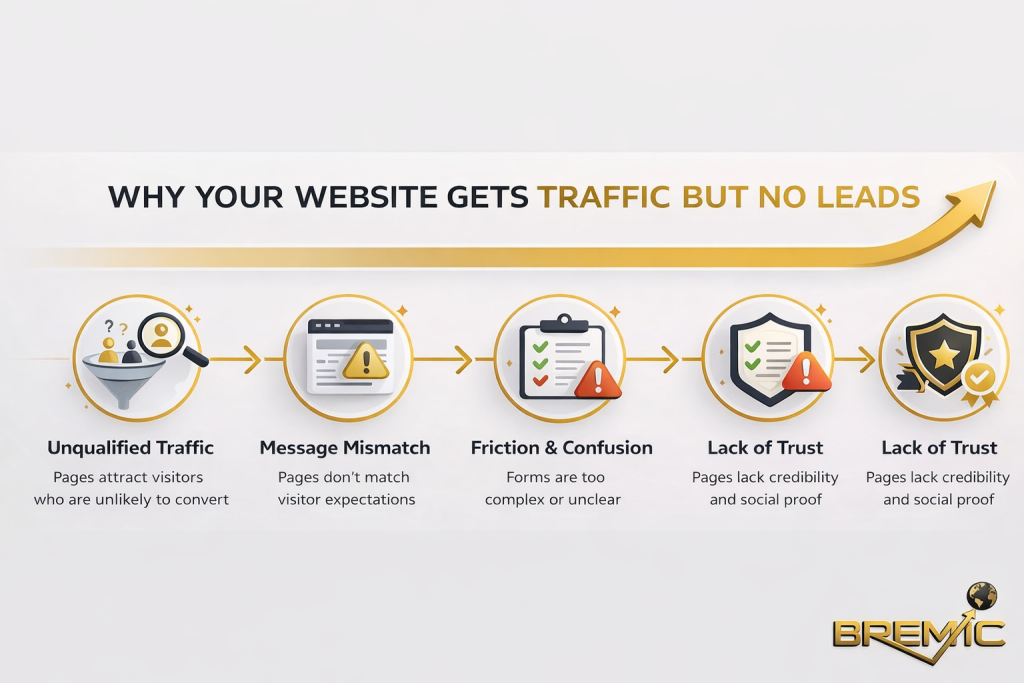
Targeting traffic that does not convert
It is easy to chase broad keywords because they look impressive in reports. But if those visitors are not relevant to your offer, the traffic does little for growth.
This is one reason vanity metrics distort decision-making. A smaller number of qualified visits is often more valuable than large amounts of unqualified traffic.
Ignoring middle- and bottom-funnel content
Some sites overinvest in educational blog posts and underinvest in the pages that help people choose. If you want more leads, you need content that supports evaluation, not just discovery.
Treating SEO and Content Marketing as separate functions
SEO helps you understand demand, intent, and site structure. Content Marketing helps you deliver value, build trust, and shape narrative. These should work together. When they are separated, content often becomes either technically optimized but weak, or well-written but invisible.
Practical Guidance
If you are actively working on how to build a content strategy that generates leads, keep the process simple and disciplined.
Start by choosing one core business theme. Build a pillar page around that theme, then create cluster pages that answer closely related questions with distinct intent. Make sure each page has a clear role in the funnel.
From there:
- Prioritize topics that connect naturally to your offer
- Write with enough depth to demonstrate real expertise
- Include internal links that move readers to the next relevant page
- Add calls to action that match the page’s intent
- Review performance based on qualified conversions, not only rankings
It is also worth involving sales or client-facing teams in planning. They often know which objections, questions, and decision criteria matter most. That insight can make content significantly more useful and more commercially aligned.
Timing and Expectations
A realistic content strategy takes time to produce results. SEO content rarely becomes a dependable lead source overnight, especially in competitive markets.
In most cases, early traction comes in stages. First, indexing and initial rankings improve. Then individual pages begin to attract relevant traffic. After that, internal linking, content refinement, and conversion improvements start lifting lead quality and volume.
The timeline depends on factors such as domain strength, competition, publishing consistency, content quality, and how well the site supports conversion. What matters most is that the strategy is sound. A focused, commercially aligned content program usually outperforms a larger but unfocused one over time.
Conclusion
Learning how to build a content strategy that generates leads means moving beyond the idea that content exists to fill a blog. A useful strategy is built around customer problems, search intent, topical structure, and conversion design.
That is the real role of Content Marketing in growth. It should not just attract attention. It should help the right audience find you, trust you, and take the next step.
The businesses that get the best results are usually not the ones publishing the most. They are the ones publishing with the clearest strategic purpose.