If you want to understand how-to-rank-your-business-in-hua-hin-on-google, the answer is not “do more SEO” in the abstract. It is to build strong local relevance, clear trust signals, and a website structure that helps Google connect your business to searches happening in Hua Hin.
That matters because local search is highly competitive in service-based and location-driven markets. In Hua Hin, businesses are often competing not only on general visibility, but on proximity, reputation, category relevance, and how clearly they communicate what they offer. A business with a decent website can still underperform if its local signals are weak. On the other hand, a smaller business can outrank better-known competitors if its Local SEO foundations are stronger and more consistent.
This article explains how to approach local rankings strategically. It focuses on what actually moves the needle: Google Business Profile optimization, location relevance, website content, reviews, local authority, and realistic expectations.
What is Local SEO
Local SEO is the process of improving your visibility in Google for searches tied to a specific area. That includes queries such as “dentist in Hua Hin,” “best café near me,” or “property lawyer Hua Hin.”
In practical terms, Local SEO helps your business appear in three places:
- Google Maps results
- The local pack in standard search results
- Organic search results for location-based keywords
This is different from broader SEO campaigns that target national or informational visibility. Local SEO is more closely tied to geography, business credibility, and intent. Google is trying to match searchers with businesses that are nearby, relevant, and trustworthy.
So when people ask how-to-rank-your-business-in-hua-hin-on-google, the real issue is whether Google has enough evidence to believe your business is a strong local result for Hua Hin-based searches.
Why Local SEO Matters
For most local businesses, search visibility is directly tied to leads, visits, bookings, and calls. A user searching for a service in Hua Hin is often not browsing casually. They are comparing options and deciding who to contact.
That is why local rankings are commercially valuable. Better visibility usually means:
- more qualified traffic
- more phone calls and direction requests
- more inquiries from people already in buying mode
- stronger brand trust before the first interaction
It also supports long-term authority. A business that consistently appears in Hua Hin search results becomes more familiar to users, earns more reviews, gets mentioned more often, and builds stronger local brand recognition over time.
From a site architecture perspective, Local SEO also fits naturally into a broader cluster model. A pillar page about local search strategy can support focused supporting articles on Google Business Profile optimization, local landing pages, review generation, citations, and service-area SEO.
How Google Decides Local Rankings
Google does not rank local businesses using one signal alone. It looks at a combination of relevance, prominence, and location-based signals.
Relevance
Relevance is about how well your business matches the search. If someone searches for “accountant Hua Hin,” Google wants confidence that your business actually provides accounting services in Hua Hin.
That means your service categories, business description, page content, headings, titles, and internal linking all need to reinforce the same message. A vague website creates uncertainty. A well-structured one makes classification easier.
Proximity
Proximity refers to how close your business is to the searcher or the location named in the query. You cannot control proximity in the same way you control content, but you can improve how clearly your business is associated with Hua Hin.
That is one reason Google Business Profile setup, local landing pages, address consistency, and local citations matter. They help Google connect your business to the area.
Prominence
Prominence reflects how established and trusted your business appears online. This includes reviews, local mentions, backlinks, business listings, and overall brand reputation.
A business with strong local authority often performs better because Google sees repeated signals from multiple sources, not just the website itself.
How to Apply Local SEO in Hua Hin
If your goal is to improve how-to-rank-your-business-in-hua-hin-on-google, the work needs to be systematic. Random updates rarely produce durable results.
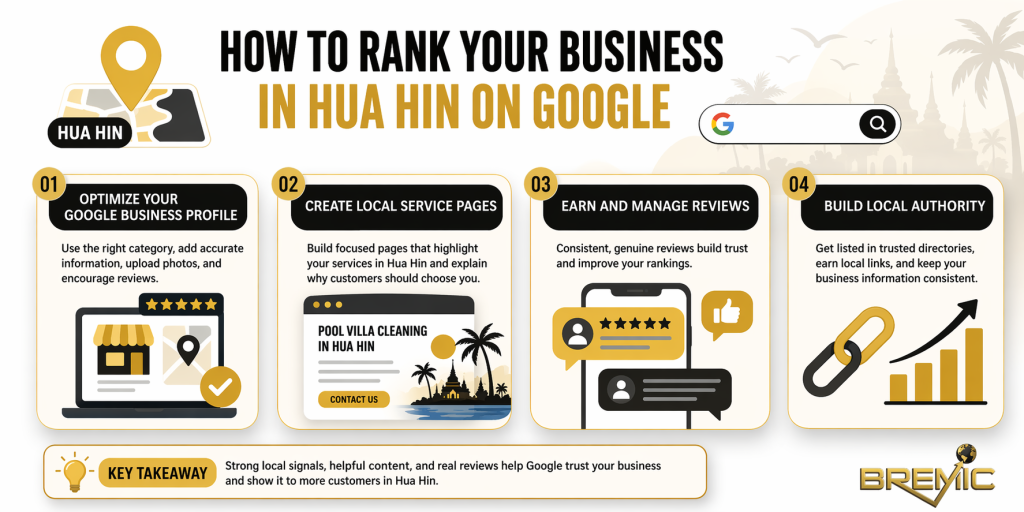
Build a Strong Google Business Profile
For most local businesses, this is the first place to look. Your Google Business Profile is a core ranking and conversion asset.
Make sure your profile includes:
- the correct primary category
- accurate business name, address, and phone number
- well-written service descriptions
- updated hours
- real photos
- clear service areas if relevant
- regular posts or updates where useful
The category choice matters more than many businesses realize. If the primary category is too broad or inaccurate, Google may misunderstand what searches your business should appear for.
Reviews also belong here, not as an afterthought but as an active part of the strategy. A healthy review profile improves both visibility and click-through potential. It signals trust and gives searchers confidence before they ever reach your site.
Create Service Pages With Local Intent
A common mistake is trying to rank a homepage for every service and every location. That usually leads to thin messaging and weak relevance.
Instead, build focused pages that align services with location intent. If you offer multiple services in Hua Hin, each major service should have its own optimized page. Those pages should explain:
- what the service is
- who it is for
- how the process works
- why local customers in Hua Hin would choose you
This is where many local businesses fall short. They mention Hua Hin once in the title tag and assume that is enough. It is not. Google needs a page that genuinely reflects local relevance, not one that simply inserts a place name into generic copy.
Avoid Location Stuffing
Using “Hua Hin” in every sentence will not improve performance. It usually makes the content weaker.
Local relevance should come from context, not repetition. Mention the area naturally in headings, body copy, metadata, and supporting content, but keep the language useful and credible.
Strengthen Your On-Page Signals
Your website still matters, even if many local searches begin in Maps.
To support rankings, make sure your pages include:
- clear title tags with service and location intent
- logical H1 and H2 structure
- strong internal linking between related pages
- descriptive service copy
- locally relevant FAQ content where appropriate
- schema markup for local business details if implemented correctly
Internal linking is especially important in a topical cluster model. If you have supporting articles on reviews, service-area SEO, local content strategy, or Google Business Profile optimization, those should reinforce the main service and location pages. That strengthens topical clarity and helps search engines understand page relationships.
Build Local Authority Beyond Your Website
A local ranking strategy is weaker when all signals come from one domain.
Google also looks at how your business appears across the broader local web. That includes directory listings, local business citations, industry profiles, associations, and relevant backlinks.
The key is consistency and quality. Your business information should match across major listings. Inconsistent names, phone numbers, or addresses can dilute trust.
Local links also help, but not every link is equal. A relevant local mention from a trusted regional site, business network, chamber page, or industry publication is usually more useful than low-quality directory spam.
Reviews Are Part of SEO, Not Just Reputation Management
Reviews influence both rankings and user behavior. They help Google assess trust, and they help customers compare you against nearby alternatives.
The best review strategy is steady and operational. Ask real customers at the right point in the process. Make it easy. Do not rely on occasional bursts of review activity followed by long silence.
It also helps to respond to reviews professionally. That does not mean writing keyword-heavy replies. It means showing that the business is active, credible, and engaged.
Important Supporting Subtopics
Local Content That Matches Real Search Behavior
Not every local search is transactional. Some users are still comparing providers, pricing, or service types.
That creates opportunities for supporting content such as:
- service comparison articles
- pricing explainers
- pages addressing common customer concerns
- local guides tied to your service niche
This content supports rankings by building topical depth around your main commercial pages. It also gives you more internal linking opportunities and helps your site meet users earlier in the decision process.
Mobile Experience and Conversion Signals
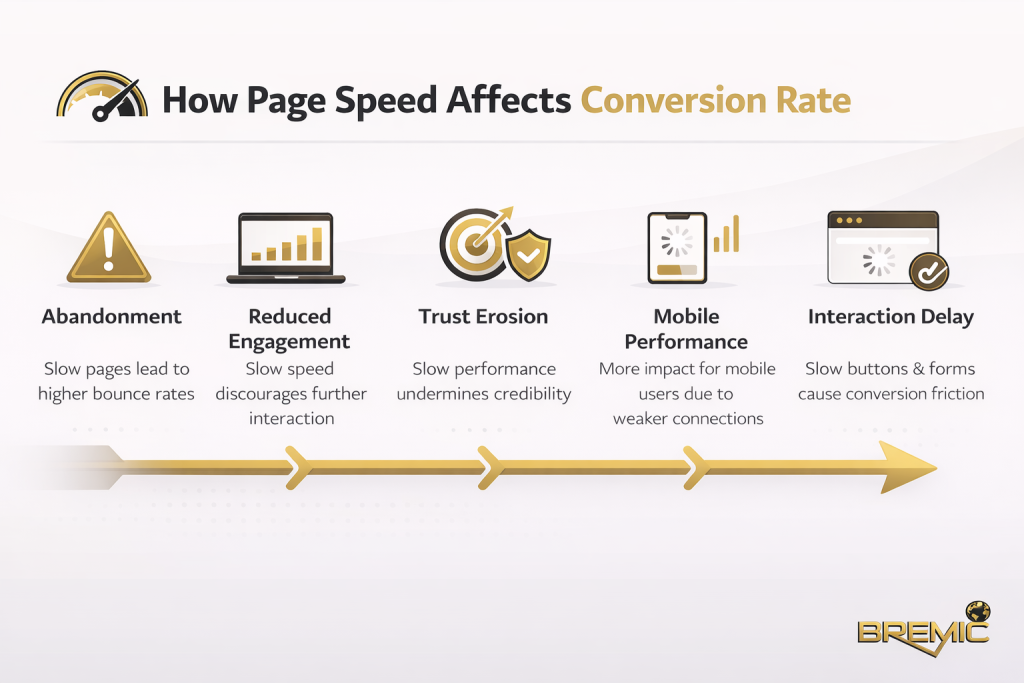
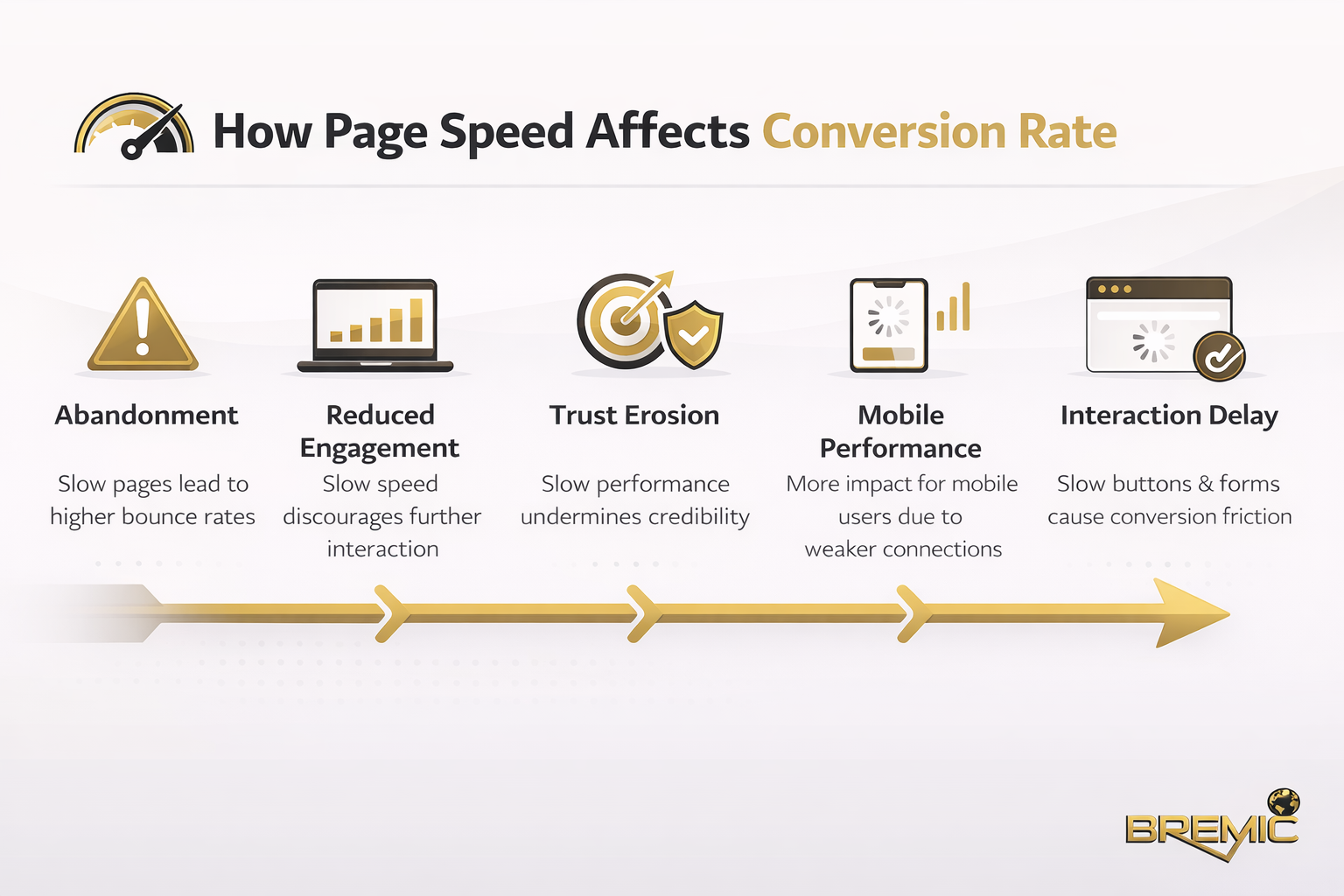
Many local searches happen on mobile devices. If your website is slow, hard to navigate, or unclear about next steps, rankings alone will not produce results.
Your key pages should make it easy to:
- call the business
- send an inquiry
- view the address
- understand what you offer
- trust the business quickly
Local SEO is not just about getting found. It is about making the visit useful once the user arrives.
Common Mistakes
One of the biggest mistakes is treating Local SEO as a one-time setup task. A completed profile and a few citations are not a strategy.
Other common issues include:
Weak or Generic Service Pages
If every page says essentially the same thing, Google has little reason to rank them differently. Each page needs a distinct purpose.
Inconsistent Business Information
Mismatch across listings creates confusion. Consistency is a basic trust signal.
Overreliance on the Homepage
Trying to rank one page for every service in Hua Hin usually limits relevance and clarity.
Fake or Manipulative Review Tactics
Low-quality review practices create risk and weaken trust over time.
Ignoring Internal Linking
Businesses often publish new content but fail to connect it to their key money pages. That wastes authority and weakens the cluster structure.
Practical Guidance
A practical approach to how-to-rank-your-business-in-hua-hin-on-google looks like this:
Start by fixing your Google Business Profile and ensuring your core business information is accurate everywhere. Then improve your main service pages so each one targets a clear local intent. After that, strengthen supporting content, reviews, and internal links.
Do not try to solve everything at once. Prioritize the assets closest to revenue first:
- Google Business Profile
- Core service pages
- Reviews
- Local citations and authority links
- Supporting cluster content
That sequence gives you a more commercially sensible Local SEO strategy than starting with blog volume alone.
Timing and Expectations
Local SEO results are rarely immediate. Small improvements can appear within weeks, especially after fixing obvious problems in your profile or on-page setup. More competitive gains usually take longer.
The timeline depends on factors such as:
- how competitive your niche is in Hua Hin
- the current quality of your website
- the strength of your review profile
- how established competing businesses are
- whether your local signals are already consistent
What matters most is sustained progress. A business that improves relevance, authority, and trust month after month is far more likely to hold rankings than one that looks for shortcuts.
Conclusion
If you want to improve how-to-rank-your-business-in-hua-hin-on-google, think less about tricks and more about evidence. Google needs clear proof that your business is relevant to Hua Hin, credible in its category, and useful to local searchers.
That means building a strong Google Business Profile, creating focused service pages, improving internal linking, earning reviews consistently, and strengthening your wider local authority. Good Local SEO is not about gaming one signal. It is about aligning the entire digital footprint of the business around local trust and relevance.
Done properly, that does more than improve rankings. It builds a stronger search presence that supports visibility, conversions, and long-term topical authority.