Getting more traffic is only half the job. If your website does not turn visitors into leads, enquiries, demo requests, or sales, the value of that traffic stays limited.
That is why understanding how to increase website conversions matters. For most businesses, the real growth opportunity is not always more sessions. It is making better use of the visitors already arriving through search, paid campaigns, email, or direct traffic.
This is where a disciplined approach to conversion improvement becomes valuable. Strong websites do not rely on guesswork, trendy design changes, or isolated tactics. They improve performance by removing friction, strengthening intent alignment, and making the next step easier for the right user.
In this guide, we will look at what Conversion Rate Optimization (CRO) is, why it matters, how it works in practice, which mistakes hold websites back, and how to build a realistic process that improves conversion performance over time.
What Is Conversion Rate Optimization (CRO)?
Conversion Rate Optimization (CRO) is the process of improving a website so a higher percentage of visitors complete a desired action.
That action might be:
- submitting a contact form
- booking a call
- requesting a quote
- starting a trial
- making a purchase
- downloading a resource
In practical terms, CRO is not about persuading everyone. It is about helping the right visitors move forward with less confusion and less resistance.
A good CRO strategy looks at questions such as:
- Does the page match what the visitor expected to find?
- Is the offer clear?
- Is the next step obvious?
- Are there unnecessary obstacles in the journey?
- Does the page build enough trust to support a decision?
This is why CRO should not be treated as a cosmetic design exercise. It sits at the intersection of messaging, UX, search intent, information architecture, trust signals, and analytics.
Why It Matters
Learning how to increase website conversions has a direct impact on business performance because it improves the efficiency of your existing traffic.
If two websites attract the same number of visitors, the one with better conversion performance usually generates more value without increasing acquisition costs. That changes how hard SEO, paid media, and content marketing work for the business.
CRO makes SEO more commercially effective
SEO often focuses heavily on rankings, impressions, and traffic growth. Those are important, but they do not tell the whole story. If organic traffic lands on pages that do not satisfy intent or do not guide users properly, rankings alone will not produce strong business outcomes.
CRO strengthens SEO by making landing pages more useful and more focused. In many cases, the best-performing SEO pages are not the ones with the most traffic. They are the ones that align search intent, page structure, trust, and conversion pathways.
Better conversions improve content ROI
Content creation is expensive when done properly. It requires research, writing, editing, optimization, and internal linking. If that content drives traffic but fails to produce action, the return is weaker than it should be.
CRO helps turn content into a more reliable business asset. That is especially important in a pillar-and-cluster model, where supporting pages should not only attract visibility but also guide users deeper into the site and closer to conversion.
It reveals where performance is leaking
A poor conversion rate is often a sign of a deeper issue. The problem may be:
- weak intent matching
- unclear value proposition
- poor page layout
- low trust
- slow load times
- distracting navigation
- too many form fields
- vague calls to action
CRO gives you a framework for diagnosing those issues instead of reacting to symptoms.
How It Works
A strong CRO process is structured. It is not a series of random tests.
Start with conversion clarity
Before you improve anything, define what a conversion means for the page. This sounds basic, but many websites blur primary and secondary goals.
A service page may want users to request a consultation. A blog post may aim to drive newsletter sign-ups or move users toward a relevant commercial page. An ecommerce product page may prioritize completed purchases, but also track add-to-cart rate and checkout progression.
If the goal is unclear, optimization becomes unfocused.
Align the page with user intent
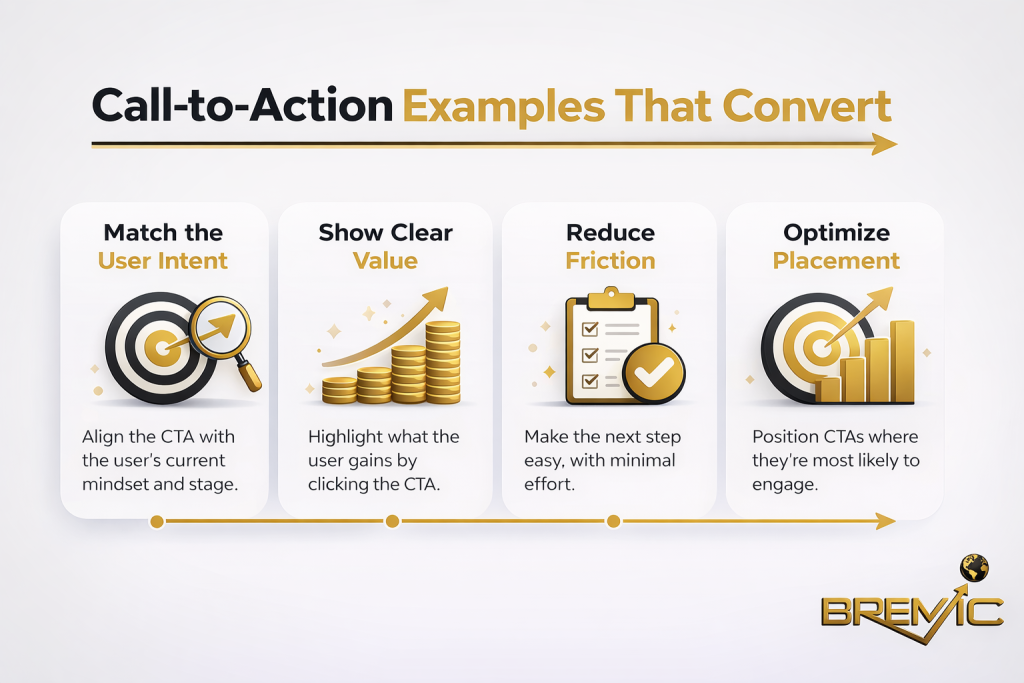
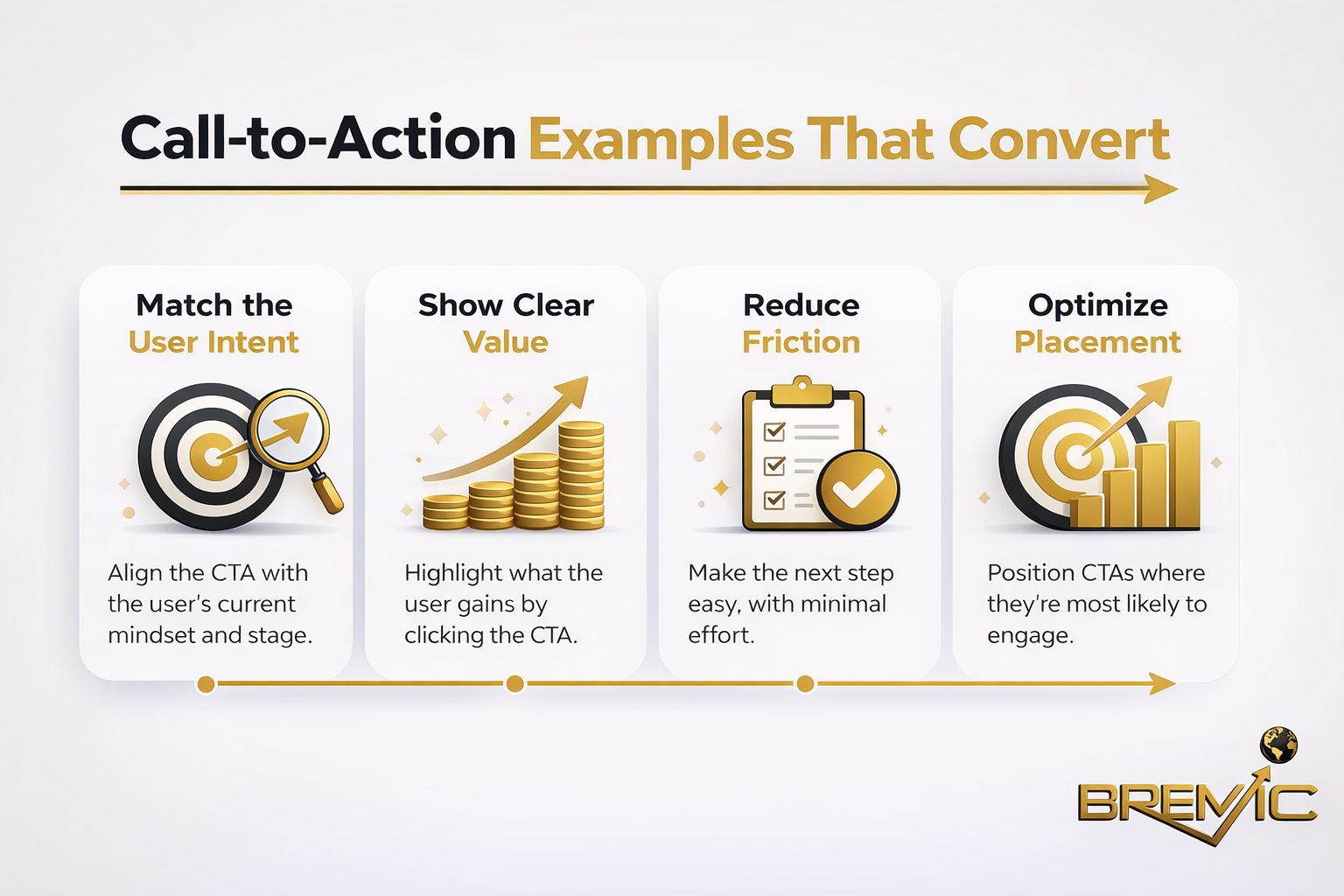
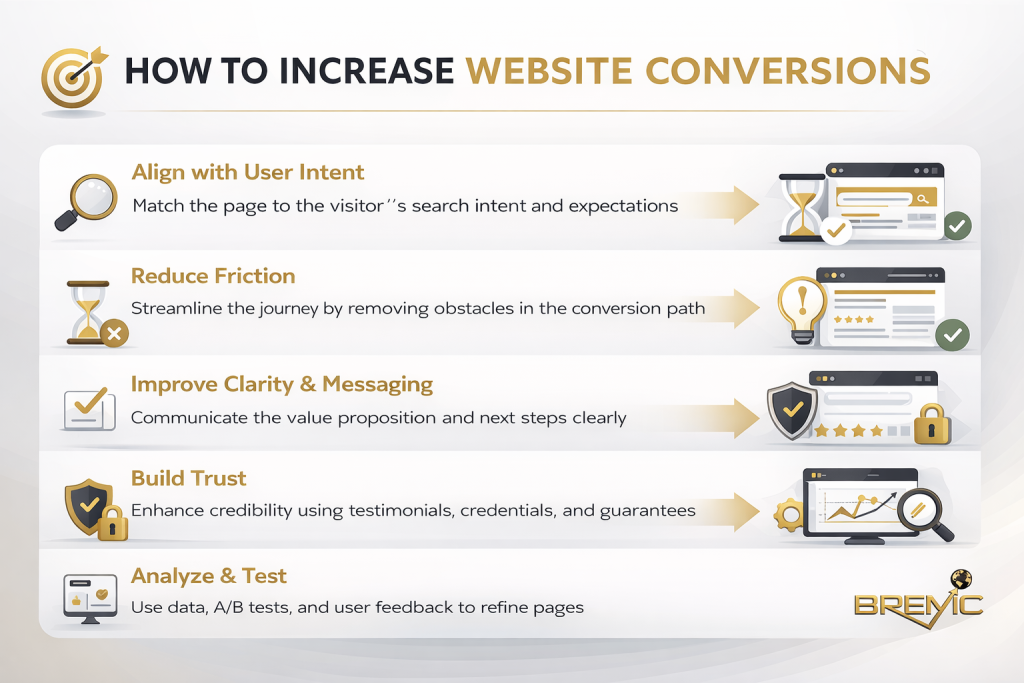
One of the most important steps in how to increase website conversions is matching the page to the reason the visitor arrived.
A user searching for informational advice behaves differently from someone comparing providers or looking for pricing. If those users land on a page that pushes the wrong message, the conversion rate usually suffers.
Intent alignment affects:
- headline wording
- page depth
- call-to-action style
- proof elements
- supporting content
- internal links to the next logical page
For example, an informational page should not force a hard sales message too early. It should first help the user understand the topic, then present the next step naturally.
Reduce friction in the journey
Conversion friction is anything that makes progress harder than it needs to be.
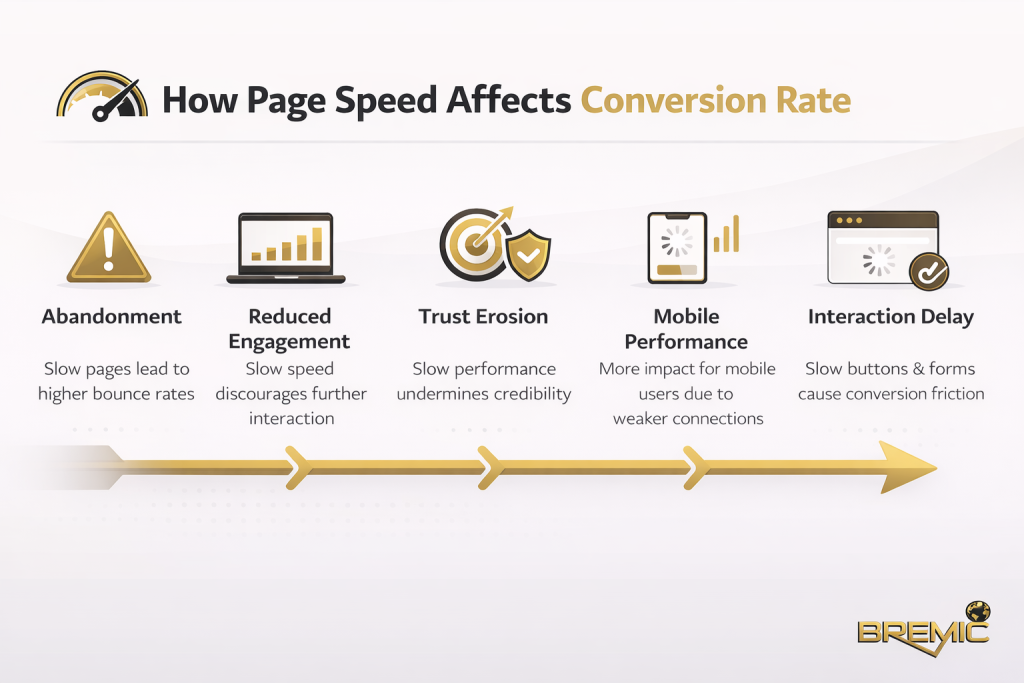
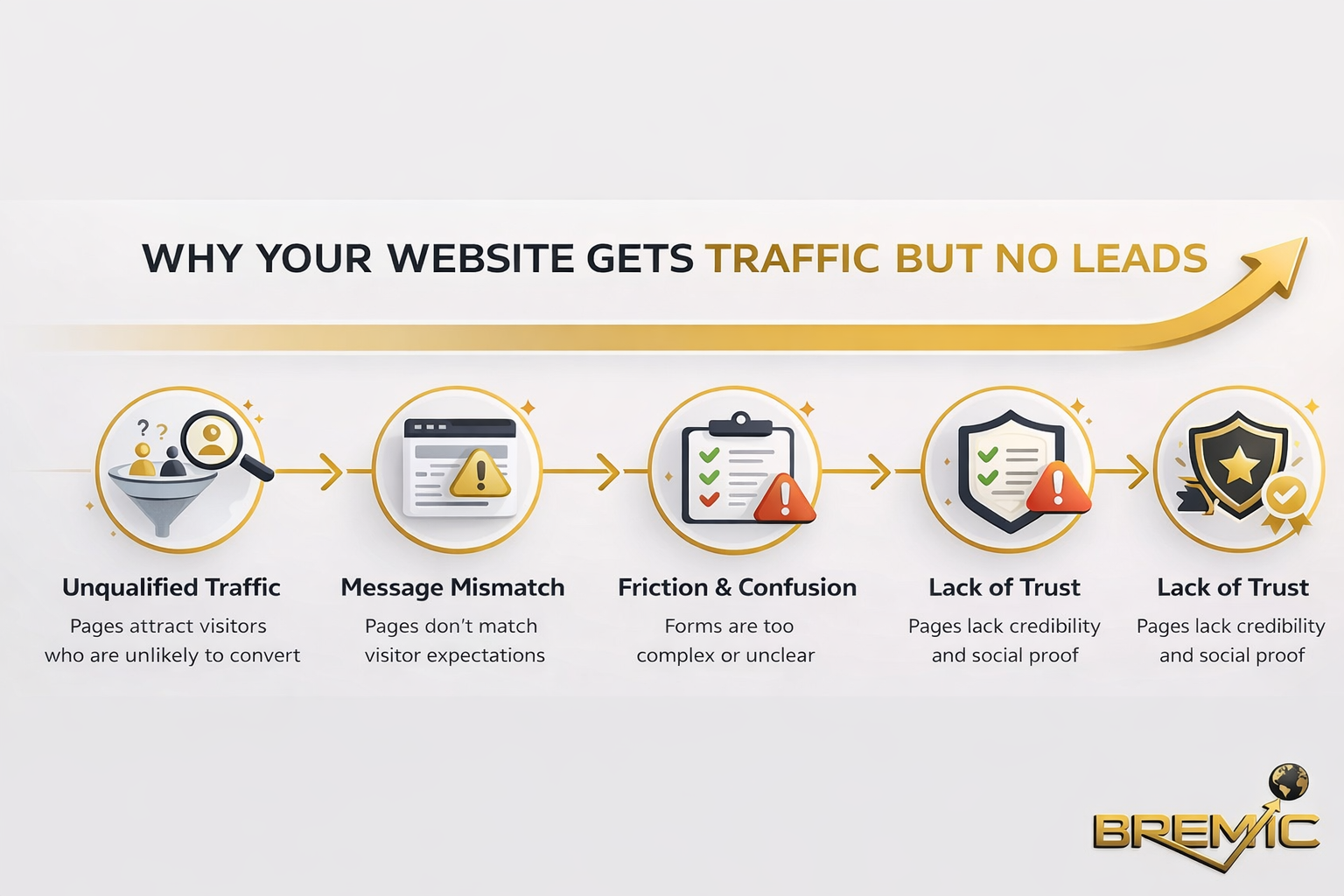
Some friction is technical, such as slow loading pages, broken forms, or poor mobile usability. Some is cognitive, such as unclear copy, crowded layouts, inconsistent messaging, or weak visual hierarchy. Some is trust-related, such as missing credentials, vague claims, or a lack of proof.
Reducing friction usually improves conversions more reliably than trying to “push harder.”
Areas worth reviewing
Value proposition
Can a visitor understand what you offer, who it is for, and why it matters within a few seconds?
Page structure
Does the content guide attention in the right order, or does it force users to work too hard to find the key points?
Call to action
Is the next step specific and relevant, or is it generic and disconnected from page intent?
Trust signals
Does the page demonstrate credibility through experience, case examples, testimonials, certifications, guarantees, or clear business details?
Form and checkout design
Are you asking only for information you truly need at that stage?
Use evidence, not assumptions
Good CRO depends on evidence. That does not always mean complex enterprise testing. It means looking at real behavior before making changes.
Useful inputs include:
- page-level conversion data
- bounce and exit patterns
- scroll depth
- heatmaps or session recordings
- form abandonment
- device-specific performance
- search query intent
- user feedback from sales or support teams
The goal is not to collect endless data. It is to find the most meaningful points of friction and prioritize the changes most likely to improve outcomes.
Important Subtopics That Influence Conversion Performance
Messaging and offer clarity
A common conversion problem is not traffic quality. It is unclear communication.
Many websites describe services in broad, polished language that says very little. Visitors should not have to interpret what your business does, what problem it solves, or what happens next.
Stronger messaging usually means:
- clearer headlines
- more specific subheadings
- less jargon
- better explanation of outcomes
- CTAs that reflect the user’s stage of awareness
Trust and credibility
Users rarely convert based on layout alone. They convert when the page feels credible enough to justify action.
Trust is built through consistency, specificity, and proof. That may include author expertise, business credentials, recognisable clients, product detail, transparent policies, or evidence of real-world results.
From an E-E-A-T perspective, this matters because a trustworthy page reduces hesitation and supports decision-making.
Internal linking and user flow
In a cluster-based website structure, internal linking plays a conversion role as well as an SEO role.
Informational pages often perform better when they guide users toward the next relevant step. That may be a deeper supporting article, a service page, a pricing page, or a contact page. Done well, internal links move users through the journey without forcing them.
This is particularly effective when anchor text reflects real intent rather than generic prompts.
Mobile experience
A page that looks acceptable on desktop may still underperform badly on mobile. Weak button placement, long forms, cluttered sections, or intrusive pop-ups often damage mobile conversion performance first.
If mobile traffic is significant, mobile CRO is not optional. It should be part of the primary review process.
Common Mistakes
Treating CRO as button testing
Changing CTA colours or button text can matter, but it is rarely the main issue. Most conversion problems come from deeper strategic weaknesses such as poor positioning, weak trust, or intent mismatch.
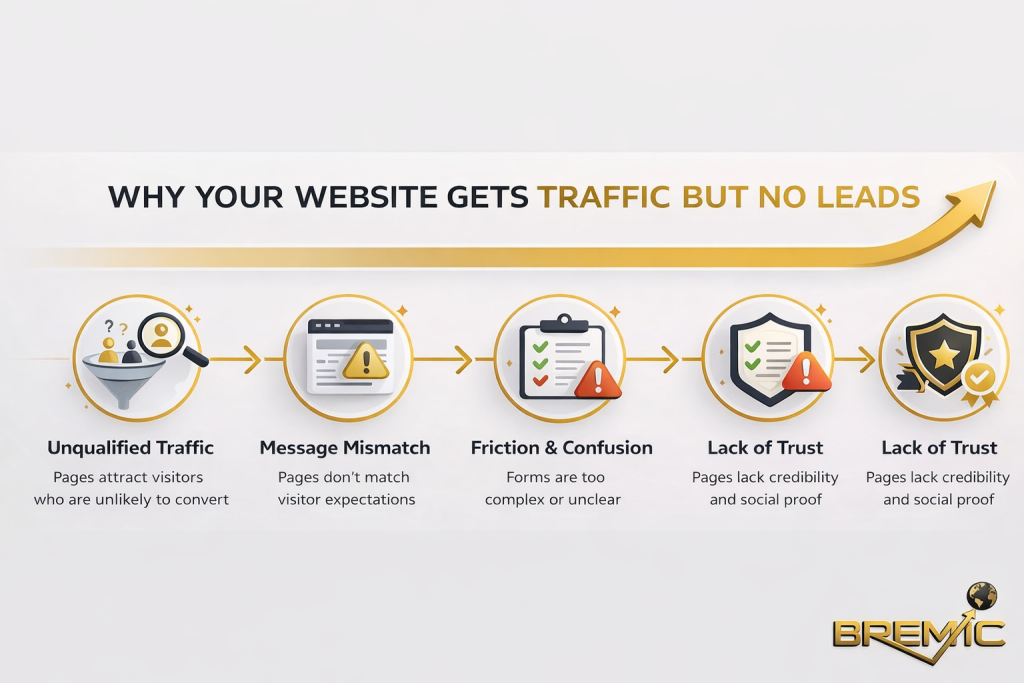
Sending the wrong traffic to the wrong page
Even strong pages underperform when acquisition and landing page strategy are disconnected. If the keyword, ad message, or campaign promise does not match the page experience, conversions fall quickly.
Asking for too much too early
Many websites try to force a high-commitment action before the visitor is ready. That is especially common on informational pages. Sometimes the better move is a softer next step that keeps momentum.
Optimizing without measurement
Without meaningful tracking, teams often mistake preference for performance. A design someone likes is not necessarily a design that converts better.
Ignoring supporting pages
Businesses often focus only on key commercial pages, but cluster content can influence conversion quality significantly. Informational content should build trust, answer objections, and route users toward relevant commercial pages where appropriate.
Practical Guidance
If you want to know how to increase website conversions in a realistic way, start with the pages that already matter most. Look for pages with strong traffic, high intent, or direct commercial value. Do not try to optimize the entire site at once.
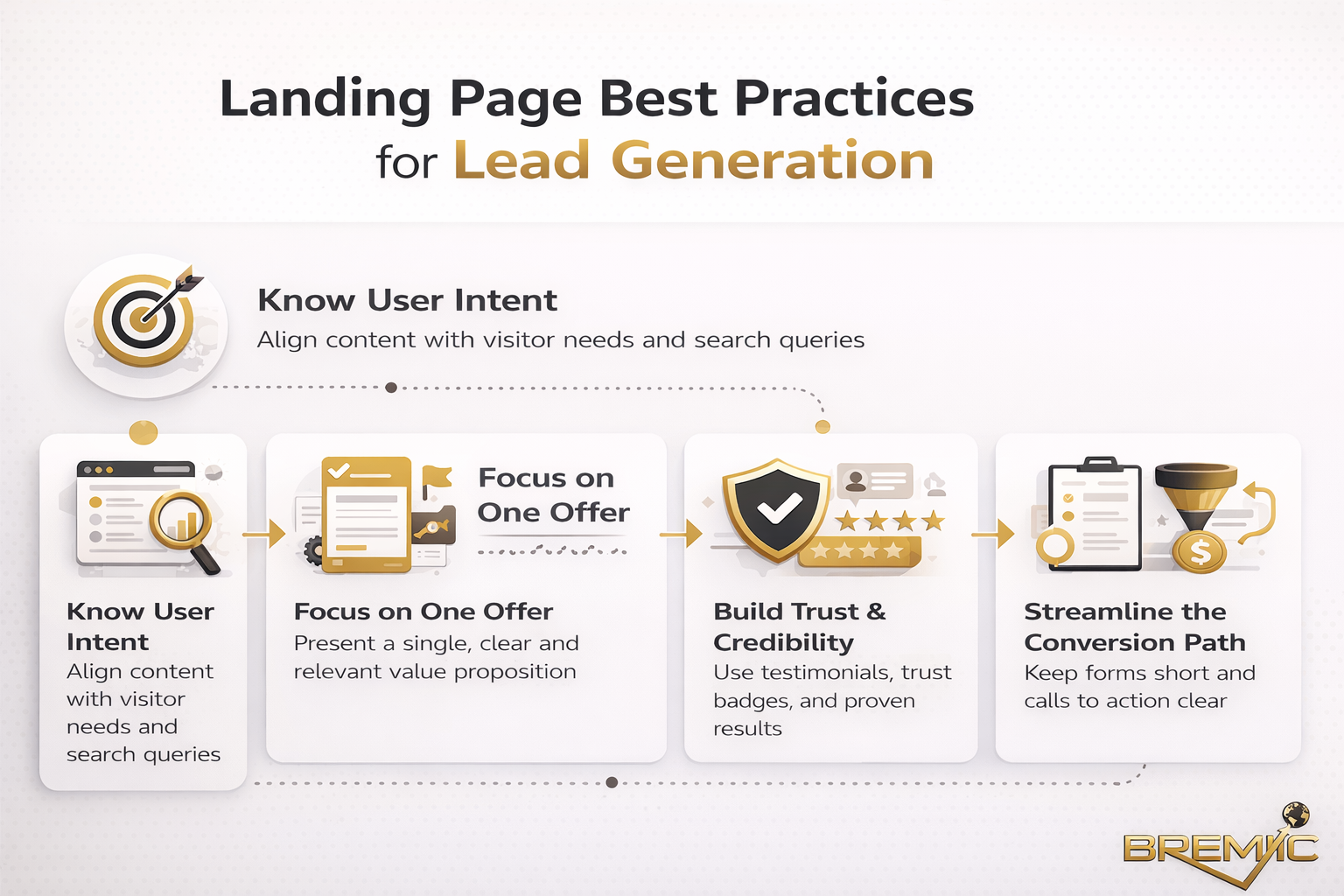
Review each page through four lenses:
- Intent: does the page meet the visitor’s reason for arriving?
- Clarity: is the offer and next step immediately understandable?
- Trust: does the page feel credible and specific?
- Friction: what is slowing users down or creating doubt?
Then prioritize improvements with the highest likely impact. In many cases, the best gains come from better messaging, stronger page structure, improved CTAs, simpler forms, and clearer internal pathways.
This is also where content strategy and CRO should work together. A well-built content cluster should not just rank. It should help users move from discovery to evaluation to action.
Timing and Expectations
CRO is not instant, and it should not be presented that way.
Some improvements, such as form simplification or clearer CTA placement, can influence results relatively quickly. Others, such as stronger messaging alignment, better internal linking, or improved content journeys, may take longer to show their full value.
The timeframe depends on traffic volume, tracking quality, testing discipline, and the seriousness of the underlying problems. Lower-traffic sites may need longer observation periods before drawing clear conclusions.
What matters most is consistency. Conversion improvement is usually the result of repeated, evidence-based refinements rather than one major redesign.
Conclusion
Understanding how to increase website conversions is not about chasing hacks. It is about building pages that better match intent, communicate value clearly, reduce friction, and earn trust.
That is why Conversion Rate Optimization (CRO) should be treated as a strategic discipline, not a final design tweak. It makes SEO traffic more valuable, strengthens content performance, and helps a website contribute more directly to business outcomes.
For serious websites, the goal is not just more visits. It is a better path from visit to action. When CRO is approached with structure, evidence, and patience, conversion growth becomes far more predictable and far more sustainable.