For many companies in Thailand, Facebook is still one of the most commercially important digital channels available. It remains a place where people discover brands, compare offers, ask questions, read reviews, and make purchase decisions. That makes facebook-marketing-for-businesses-in-thailand more than a posting exercise. It is a strategic discipline that sits at the intersection of audience research, content planning, local market understanding, and conversion-focused communication.
The opportunity is real, but so is the competition. Many businesses publish frequently and still see weak engagement, low lead quality, or inconsistent results. In most cases, the problem is not the platform itself. It is the lack of structure behind the marketing.
This article explains how businesses in Thailand should approach Facebook strategically, how Social Media Marketing & Optimization fits into the picture, and what separates effective execution from wasted effort.
What is Social Media Marketing & Optimization
Social Media Marketing & Optimization is the process of using social platforms to build visibility, attract the right audience, improve engagement, and generate business outcomes through continuous refinement. In practical terms, it is not just about being active on social media. It is about making each part of your presence work harder.
That includes:
- choosing the right messaging for the right audience
- publishing content with a clear purpose
- improving profile credibility and brand consistency
- testing creative formats and timing
- responding to audience behavior with measurable changes
- aligning content with business goals such as leads, sales, bookings, or inquiries
In the context of facebook-marketing-for-businesses-in-thailand, optimization matters because local audiences often respond to trust signals, relevance, responsiveness, and cultural fit more than volume alone. A business page that looks active but feels generic will rarely perform as well as one that communicates clearly, reflects local buying behavior, and removes friction from the decision-making process.
Why it matters
Facebook still plays an important role in the Thai customer journey, especially for businesses in retail, hospitality, beauty, education, real estate, healthcare, food, and local services. Consumers often use it as a first validation point. They may search for a page, scan recent posts, read comments, check how quickly the business responds, and compare that experience with competitors.
That makes Facebook part brand channel, part customer service touchpoint, and part conversion layer.
From a broader digital marketing perspective, strong Facebook execution can support:
Brand authority
A well-managed page helps a business appear established, credible, and active. Consistent publishing, clear offers, and relevant audience interaction all strengthen perceived trust.
Traffic and demand generation
Facebook can drive users to landing pages, product pages, contact forms, or messaging channels. It can also create branded demand by increasing familiarity before users search elsewhere.
Conversion support
Not every conversion starts and ends on a website. In Thailand, many businesses still convert through Messenger, LINE, phone calls, or direct comment inquiries. Facebook often acts as the bridge between attention and action.
Better local market fit
A generic social strategy rarely works well across markets. Facebook marketing for businesses in Thailand needs to reflect language preferences, content format habits, seasonality, promotions, and regional customer expectations.
How it works and how to apply it
A strong Facebook strategy is built on clear decisions. Businesses that treat the platform as a structured channel usually outperform those that post reactively.
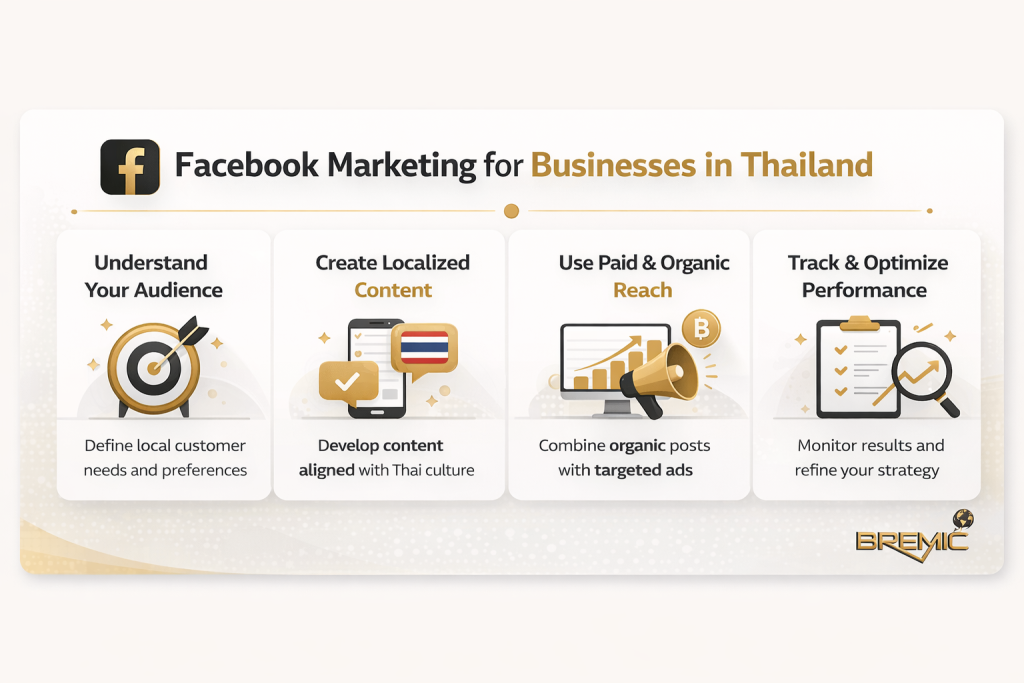
Start with audience clarity
Before content planning, define who you want to reach and what stage of awareness they are in. A Bangkok restaurant, a Phuket villa agency, and a B2B logistics company in Thailand will need completely different content angles.
Useful questions include:
- What problem is the customer trying to solve?
- What objections slow down the sale?
- What information builds trust fastest?
- What type of post fits the audience’s intent: awareness, comparison, proof, or action?
Without that clarity, content becomes inconsistent and hard to measure.
Build around content pillars
Most businesses benefit from three to five repeatable themes. This prevents random posting and makes the page easier to understand for both users and internal teams.
Typical content pillars might include:
- educational content
- product or service explanation
- customer proof
- behind-the-scenes credibility
- promotions or campaigns
For facebook-marketing-for-businesses-in-thailand, these pillars should also reflect local buying triggers. For example, limited-time offers, social proof, staff personality, community relevance, and fast replies can matter more than polished branding alone in some sectors.
Optimize the page before scaling content
Many businesses focus on content output while ignoring profile fundamentals. That is a mistake. If the page itself is weak, even strong posts will convert poorly.
Review these core elements:
- page name and category
- profile and cover image consistency
- business description and value proposition
- contact details and call-to-action button
- location accuracy if relevant
- response workflow for comments and messages
- pinned posts or featured offers
Optimization at this level is basic but commercially important. It reduces friction and improves trust before users even engage with a post.
Match format to user behavior
Different formats serve different goals. Short videos can improve reach. Static graphics can communicate offers quickly. Carousels can explain steps or product choices. Text-led posts can work when the message is timely and specific.
The right format depends less on trends and more on what your audience actually responds to. For many Thai businesses, content that is simple, direct, visual, and easy to act on will outperform content that looks overproduced but says very little.
Use paid and organic together
Organic Facebook alone is rarely enough for consistent growth, especially in competitive categories. At the same time, relying only on paid distribution can become expensive and inefficient if the underlying content and audience understanding are weak.
A more durable model is to use organic content to build credibility and audience insight, then use paid campaigns to amplify proven messages. This is usually where Social Media Marketing & Optimization becomes more effective, because creative testing is informed by real engagement patterns rather than guesswork.
Important subtopics
Content localization for the Thai market
Localization is not just translation. It is adapting tone, examples, offers, visuals, and messaging to the audience’s expectations.
Businesses in Thailand should consider:
Language choice
Some brands perform better with Thai-first communication. Others, particularly in tourism, premium real estate, or international education, may need bilingual content. The right choice depends on customer mix, not brand preference.
Cultural and seasonal relevance
Campaign planning should reflect local context. Holidays, long weekends, school cycles, weather patterns, and shopping periods affect attention and buying intent. Strong Facebook marketing plans account for this rather than posting the same content structure year-round.
Trust and responsiveness
In many local categories, speed of reply and clarity of communication directly influence conversion. A business that responds quickly and professionally can outperform a larger competitor with better design but slower execution.
Measurement and optimization
A business should not judge Facebook success by likes alone. The right metrics depend on the business model.
More useful indicators include:
- qualified inquiries
- cost per lead
- click-through rate
- message volume from the right audience
- conversion rate from Facebook traffic
- assisted conversions across channels
The goal is not to chase vanity metrics. It is to understand whether Facebook is attracting the right people and moving them toward business outcomes.
Common mistakes
A lot of underperformance comes from predictable errors.
Posting without a strategy
Random posting creates random results. If there is no clear audience, offer, and content structure, performance usually plateaus.
Copying global best practices without local adaptation
Advice that works in one market does not always work in Thailand. Customer expectations, communication style, and platform behavior vary by sector and audience.
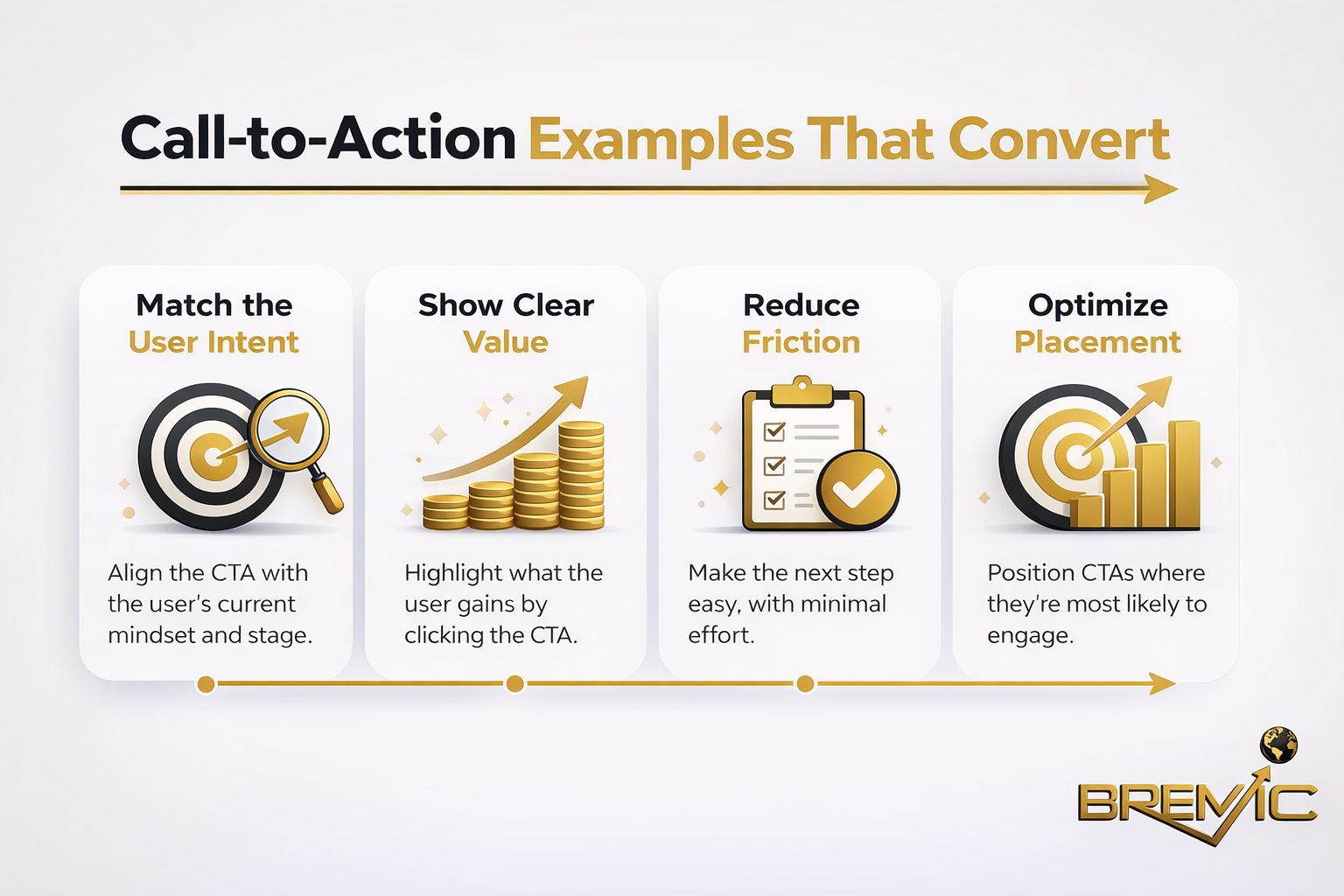
Treating engagement as the only goal
High engagement is not automatically good if it does not attract potential buyers. Content should be judged by relevance and business impact, not just surface interaction.
Ignoring conversion pathways
If users do not know what to do next, results will suffer. Every page and campaign should have a clear next step, whether that is messaging, booking, ordering, or visiting a landing page.
Inconsistent brand messaging
When offers, visuals, and tone shift too often, trust drops. A business page should feel coherent even when content varies in format.
Practical guidance
For most companies, the best approach is not to do more. It is to become more deliberate.
Start by clarifying the audience and the primary conversion action. Then build a content plan around recurring themes that answer real customer questions, prove credibility, and create commercial intent. Review the page itself to remove friction. Test formats based on business goals, not assumptions. Finally, measure results in terms that matter to the business.
For facebook-marketing-for-businesses-in-thailand, practical execution often works best when it combines local relevance with operational discipline. That means understanding the market, publishing consistently, responding quickly, and improving based on actual performance data.
This is also where Facebook should connect to the wider digital ecosystem. Businesses that treat it as part of a broader Social Media Marketing & Optimization strategy usually make better decisions about messaging, audience targeting, remarketing, and conversion tracking.
Timing and expectations
Results on Facebook are rarely instant, especially if the page has weak foundations or inconsistent history. A business may see early improvements in engagement and inquiries within weeks after fixing positioning, profile quality, and content structure. More meaningful commercial gains usually require longer-term refinement.
A realistic expectation is that strong performance comes from repeated optimization, not one-off campaigns. Audience learning, creative testing, and offer-market fit all take time. Businesses that expect immediate scale from a few posts or a small ad budget often misread the platform.
The better mindset is to treat Facebook as an ongoing acquisition and trust-building channel. That creates more stable results over time.
Conclusion
Facebook-marketing-for-businesses-in-thailand works best when it is approached as a serious marketing function rather than a basic social media task. The businesses that perform well are usually the ones that understand their audience, localize their communication, optimize their page structure, and connect content to real commercial goals.
The strategic value of Social Media Marketing & Optimization is not in publishing more content. It is in making content, messaging, and audience targeting more useful, more relevant, and more measurable.
For businesses in Thailand, that means building a Facebook presence that reflects how customers actually evaluate brands, ask questions, and make decisions. Done well, Facebook can support trust, demand generation, and conversion. Done poorly, it becomes a time-consuming channel with little business return.
The difference is almost always strategy.